The Bee by John Johns

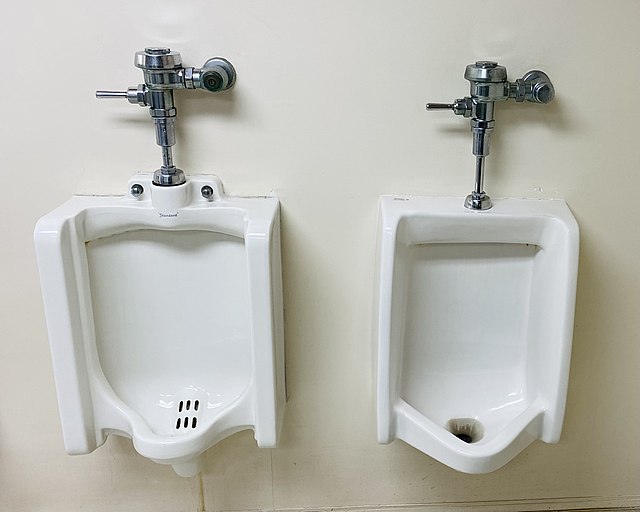
Mid-piss I realised there was a bee there in the toilet bowl, trying to crawl up the side. The stream that’d already left my penis caused the bee to slip back down into the water. But it was not my fault – the trajectory of that initial burst of piss had been determined before I even saw the bee. How could I have known? As the water yellowed, the bee struggled about with its tiny black limbs that were not designed for swimming, and with its cheerful fur sodden. My piss continued unabated. I was really drunk and really needed a piss and could not stop. Then I tried to stop and felt an actual pain in the base of my penis. Generally speaking the bees are in real trouble – I knew this, but the piss did continue. Unabated. In fact my attempt to dam the flow had created a build-up, and the velocity and volume of piss was now even greater than before. I could taste sweat on my lip and, watching this bee tumble and spin underwater somersaults, I knew that it was still a choice. I could be pissing on the floor right now but I wasn’t. I was drowning the bee. That was my choice. Bobbing in and out of sight amid the settling froth, the bee buzzed on, completely lost in the wake of humanity, and then I flushed the toilet and the piss and the tortured bee were rushed off like they were never there at all. So terrible.


John writes from Glasgow. He just finished a novel called ‘A crate that once contained oranges’, excerpts of which have appeared in Back Patio, Lighthouse, and Perverse. In 2019 zimZalla released a book of his. He also runs a journal called Tar Press, publishing new fiction onto Twitter. Their archive features, among others, Amit Chaudhuri and Julianne Pachico. Tar Press is @tar_press

Bennton by Steve Gergley

When I get home from work on Friday afternoon, I discover a black envelope slipped under the front door of my house. Inside the envelope is a letter from a person who claims to be my long lost brother named Bennton. Though I am an only child, I read the letter out of curiosity.

In the letter, Bennton writes that he has been searching for me for the past twenty-eight years, and that this grueling search has plunged him into an inescapable black hole of depression and sorrow. He writes that because of this depression, he has developed a crippling addiction to Hershey’s Special Dark Chocolate Bars with Almonds. He writes that he is eating one such chocolate bar right now, as he is scribbling this very sentence, but it is the last bar in his possession, and he greatly fears the withdrawal symptoms that will soon follow, because they are horrific and tortuous and entirely not fatal. He writes that he possesses a, “very impressive and very valuable,” (his words, not mine) antique knife collection, and that he is willing to sell/trade any and all of these knives for money that can be used to buy more chocolate bars. He writes that he is very excited to finally meet me after so many years of searching, but then he veers into a tangent explaining that his earlier reference to his knife collection was in no way intended to be athreat, and if he accidentally conveyed that impression to me, he greatly apologizes. He writes that he can’t wait to meet me, his long lost brother, his only surviving blood in this world. He writes that he is waiting for me in my bedroom at the end of the hallway, and he strongly recommends I bring a very large amount of the aforementioned chocolate bars when I return to my bedroom to greet him, because he has laid out his knife collection on top of the soft cotton comforter of my bed, and there are many shameful and horrendous things he has done in the past when starving for a fix.


Steve Gergley is the author of The Great Atlantic Highway & Other Stories (Malarkey Books ’24), Skyscraper (West Vine Press ’23), and A Quick Primer on Wallowing in Despair (Leftover Books ’22). His short fiction has appeared or is forthcoming in X-R-A-Y Literary Magazine, Pithead Chapel, Maudlin House, Passages North, Always Crashing, Rejection Letters, and others. In addition to writing fiction, he has composed and recorded five albums of original music. He tweets @GergleySteve. His fiction can be found at: https://stevegergleyauthor.wordpress.com/

Secret by Blake Levario

It’s a big secret. But if i told you it wouldn’t be. The secret would be broken in half. You
take one, I take the other. The secret is cherry flavored. It’s huge. But I can’t tell you.
Sorry. You show me your polaroids but not all of them. I think you have a secret too. Is it
bigger than mine? That makes me want to tell you my secret so you tell me your secret
and we can compare them. This wouldn’t do anything but displace us. The world is big
but my secret is bigger—think: universe sized. Think: bigger than that. Remember that I
carry my secret, and I’m six foot nothing in boots. I’ve been keeping this secret my
whole life. It just built itself a barn. In space. The barn is everywhere. Inside of you, yes.
This secret is so big that it makes up who you are, who I am. So if I love you and you
love me, the secret is shared between us. If you don’t love me and I love you, same
thing. It’s a really big secret. I wish I could tell you.


Blake Levario lives in Brooklyn and collects Snoopy tattoos.

The Invention of the High Five by Joshua Trent Brown

I ask my mom if she remembers the days before the high five and she looks at me as if I just walked into her hospital room with a monkey on my shoulder and he’s wearing a diaper and playing his way through Kenny G’s Greatest Hits. She asks me why I’m asking her about high fives on a day like today. But she can hardly ask this question with the tubes out of her nose and arms and legs and wherever else. I ask her if she knew that the high five wasn’t invented until the late 70s, by a baseball player. She says no one thinks about the implications of the moment they’re in when they’re in it, but no, she didn’t watch baseball. I ask her what they did before high fives then. She says they just did things; they didn’t worry about what they should do after. A doctor comes in and tells us it’s time to prep my mom for surgery. I ask the doctor if she remembers when the high five was invented. She stops pushing my mom out of the room and says that everything will be okay, my mother is in capable hands. The monkey on my shoulder plays on, despite the tiny tremors from my hands’ trembling. He’s made his way through the track list to The Moment now. My mom turns back to me as they push her down the hall and shakes her head at the little guy, as if to say that’s too on the nose. But he just keeps on jamming.


Joshua Trent Brown is a writer from Raleigh, NC, and a fiction editor at JAKE. He has been published in a dozen cool lit mags like HAD and The Dead Mule. He also has a novella that he hopes you’ll want to publish after reading this <3. Find him on Twitter @TrentBWrites.

Worst Neighbor in Town by Alan ten-Hoeve

Our first VCR was a big deal and weekend mornings were for mom’s tapes. She’d kick me out so I couldn’t interrupt the cop shows she recorded that week over the cop shows she recorded the week before. With no friends and nowhere to go I’d wander over to the vacant lot next door and play Star Wars or something. During spring and summer Mr. Calabrese used the lot to grow vegetables, herbs, and fruit he shared with neighbors, leaving bags of fresh food on doorsteps like an agrarian Santa Claus. Sometimes I’d climb the tree in our yard, sit in a cupped fork that rose above the fence, and spy on Mr. C through the leaves as he worked. If he saw me he’d hobble over, pipe clamped in a notched grin, and pass me a handful of berries. One time I asked why he smoked a pipe. “To keep my nose warm,” he said, tapping the side of the pocked rutabaga in the middle of his face.

In winter I had the lot to myself. One cold day in late February a fresh layer of snow covered last year’s garden rows. A good enough day to battle a Wampa on Hoth. But I didn’t feel like playing Star Wars. After dragging my heels back and forth between rows I pried a board from a stack of pallets Mr. C used for trellising, then kicked through the pile of rocks he tilled up over the years. I selected the roundest one I could find. Hefted its weight. Stepped up to an imaginary plate, and got into a batting stance. I never played baseball before. Didn’t really know the rules. The only thing my dad showed me how to swing was his belt. But I’d seen it portrayed in enough TV shows and movies to have an idea. I imagined the classic scenario: bottom of the ninth, bases loaded, two outs. My team down by three runs.

Sunlight hit the salted cars parked along the curb. Reflected off the cloudy panels of the beater Mr. Calabrese used to deliver crops to neighbors. The block looked deserted. Everyone was at church or nestled inside their warm houses. I was alone. It felt good. I looked out as if I was the center of attention in a packed stadium.

I tossed the rock up, swung. Strike one. Strike two. Strike two and a half. “Fuck.” I stepped back from the plate. Spit. Took a few deep breaths. I tapped my sneakers with the board like I’d seen on TV. Spit again. Twice. Three times in a row for good luck. Stepped back up to the plate. Eyed the pitcher. Tossed the rock. This time I felt it connect. The crack of rock on wood popped my ears and a shockwave ran down the board, through my wrists, up my arms. The crowd came unglued. I dropped the board. Heard the announcer say, “Go-ing . . . Go-ing . . . GONE! HOME RUN!”

I followed my teammates around the bases at an easy jog. Took off my baseball cap and waved. A muted crunch stopped me before reaching home plate. I turned toward the sound with a primal knowing that drew my eyes to the rock resting in a crater of spiderwebbed glass that had once been the windshield of Mr. Calabrese’s truck. The stadium full of cheering fans disintegrated and John Street stood naked and cold. I forgot all about home plate and ran home. Went straight to the bathroom, the only room with a window that looked out over the vacant lot. I could feel my heart beating in my ears. Certainly someone must have seen me or heard the crunch. But no one appeared. The block was silent. Still, I knew it was only a matter of time. All day I waited for that knock on the door. When the waiting was too much I closed myself in the bathroom to watch the scene. Each time I had this absurd hope that I’d look out and see that the windshield was fine. That I’d imagined the whole thing. When I saw it wasn’t fine I played with the idea that some other event had brought the rock down into the windshield before I got there. I simply hadn’t noticed. By my sixth or seventh trip to the bathroom Mom paused her tape and eyed me through the cigarette smoke and told me to stop slamming the door.

Sometime before dark I looked out the bathroom window and felt all the tiny hairs on my body buzz. Mr. Calabrese stood by his truck with a policeman. He was shrugging and gesturing at the broken windshield with his pipe as the cop wrote something on a pad. I couldn’t make out what they were saying over the idling cruiser.

In the following days and weeks I waited for a knock on the door. For a policeman to cuff me and take me away. But no one ever came. No one ever said anything. I’d gotten away with it. I felt like the worst neighbor in town. But that was easy. My conscience I could deal with. What worried me was what my mom would do if she found out what I’d done to Mr. C. I decided right then and there not to tell a soul. And I never will.


Alan ten-Hoeve wrote a book called Notes from a Wood-Paneled Basement (Gob Pile Press). He is a decent neighbor.

3 Flashes by Juls Macdonell

big 1

been familiarizing myself with the tops of elevators lately, cause you never know, and I’m an optimist; always imagined disasters in daylight. my husband started knocking on wood each night when I forget. I keep moving the heavy houseplants further in to their shelves so they might not drop on the cat. I didn’t water them for 2 months, didn’t deposit $800 worth of cheques for 2 months either, but I went to the dentist cause my jaw aches like a fault line. when I moved here I wrote a poem about the city tipping sideways and never finished it. sometimes I fall asleep with my heart racing. sometimes I organize my wishes like they’re not a secret, and to stay humble I put at the bottom, “die while the sun is up,” if I can’t die old or accomplish what I want before then. below that is “under a full moon,” “on a clear sky,” and barring all of those, “fast.” I tell the stars no worries if not

I never know how to talk to kids

I ask them if their school has any mysteries: do the barred courtyards have any monsters? what ghost stories do you have for that one weird bathroom with the showers? have you been to the basement? does the janitor creep you out and do you feel bad about that? how often are you scratched by the inside of a bush? do strangers stare at you (do you stare at them)? do you sometimes smell a candle burning out? do you have to sleep against a wall? have you ever woken up looking at yourself?

my cat watches the computer monitor

Hello maia I love you very much you are such a good little kitty see? I love you I love you I love you 


Juls studies English and writing at University of Victoria. You can find her work in HAD magazine so far.

You Go Get Her! by Brittany Deitch

I tried going to the aquarium to make it up to myself. But I just ended up there crying to get out, and thinking about how none of the living things there had a choice. I ended up drowning myself in the tank with all the pink ones, hoping they’d give me my color back and blend. But worst of all, I never even went. I couldn’t. I really wanted to but I just couldn’t. We were supposed to go after our dinner the night before Valentine’s Day, but we fought and fought and I think we would’ve gotten there and it would’ve been closed. I checked the times (you said you had checked the times). It closes at 4 pm on Tuesday. Dinner was at 4:15. We were fighting until 10:35. I did think that I could love you into being yourself or being here or being with me. I always knew but I really didn’t want to, so I just stopped knowing. I think that all the pink fish swam inside and entered me through my mouth, making me as large as the tank and stretching my skin thin against the glass like a shield, like a covering, like protection. For the fishes. Wait, but what did you see? If it was a different sort of image, or a dream, I can let myself be wrong. A second opinion doesn’t hurt. I know you’re not even seeing this, here, at the Camden Aquarium, but I know that you wish you were so I’d be willing to bend my reality a little. So you can feel INCLUDED. Nobody saw when they were walking by– it was like I was invisible. All you need is an alibi. Where were you at 10:35 pm, February 13th, when the Camden Aquarium fish tank exploded with pieces of a real girl’s FLESH? Could you identify this body? Do you even recognize her stuffed full of FISH who STRETCHED through her SKIN? They were only trying to help her get her aura back. They went in through her mouth like food, they went through her veins and inside every inch like YOU, they covered her in scales. Each prickly octagon INGRAINED IN THE SKIN, PINCHING SKIN, ELEVATED AN INCH ABOVE, had words. She ended up with writing all over her body. She left notes. All of these things she wanted to do, how she thought of you. If only you’d come by and read it all. She knew you’d like that, to be TALKED ABOUT. FOR HOURS. BY EVERYONE. For it to all be so ROMANTIC and TREACHEROUS. And about you! But you couldn’t make it. The aquarium closed, and you had do what was best for you.


Brittany Deitch is a Philadelphia college grad, music scene denier, and stream-of-consciousness writer. She currently writes for Paste Magazine, runs/edits Ratpie Friends, and has words in Rejections Letters, Maudlin House, and Bottlecap Press. She writes on Substack at https://theworstpersonintheworld.substack.com/

The F*cking Birds by Jenn Salcido

Oprah Winfrey can tell you about the great bowerbird; the queen of all media seems impressed, for what it’s worth.

I once had this nature documentary on DVD, is how she was talking to me. I heard her narrating its courtship rituals, watching while it built its sex tent. Beautiful twigs, fine beans, pearlescent berries dot the floor of its woven house, waiting for some ladybird to pass by. Oprah calls it a common bird, and I don’t know how she can say that with a straight face. It’s like a diabolical realtor, selling dreams to its many mates. This could be yours, the bird whispers. No money down.

When birds fuck, they hover, kind of.

It’s not like rutting, not like banging until the bedsprings break. It’s gentle and dignified and over in a flash. That part isn’t fun for anyone, sure, but it’s better than watching a frog laboring through the murk of a pond, carrying another angry frog on its back. It’s better than watching a tomcat rape a tabby. Like all things with birds, there’s only a suggestion of movement – a shadow of lovemaking.

You wonder whether you actually saw it happen, or if you were misunderstanding. If you blinked, you could still convince yourself that you’d seen it. Have you ever seen a hummingbird, or thought you saw a bug, only to realize it’s a hummingbird? That’s one of their greatest tricks – we’re never sure what they’re up to; they’re not as vulgar as we are, not all about airing their dirty laundry.


Jenn Salcido is a writer based in Los Angeles, CA.

2 Smallies by Lamb

THE FRIDGE MAN

At the end of the day, all I want to do is beam from Alexa to Alexa, going through the fridges of Americans. I want to taste their days and guess the strength of their relationships based on what’s in there. My good spoon and I would sample every half-gone fruit spread in the country, straight from the jar, learning by experience the difference between jellies, jams, preserves, whatever. You couldn’t tell me anything. I’d guess the items inside before opening the door, picturing the shelves, the sauce racks, the hinging plastic shell. I’d eventually get lucky and guess every product in the Hotpoint of a performance marketer while he slept on the couch in the other room. He’d hear me celebrating, making eggy ramen in his kitchen. He’d flick the light on and rub his small eyes. “Fwidge Man? Is that weally you?”

HELP ME OUT HERE

I’m at the urinal in the WeWork men’s room when a guy rests his chin on my shoulder and sighs. He has a gelled part in his black hair and the ideal suggestion of cologne. I tuck away my member, but I don’t push him off or leave just yet. It’s been a while since I’ve felt this needed.


Lamb is an American writer // web: lamb.onl , twitter: @read_lamb, insta: @lmbonl

Update by Rick Claypool

My phone downloaded an update and now it shoots lasers. I noticed after I heard people talking about it at the bus stop. A guy on a bench in a hat like an oversized inside-out sock said, “Check out this shit.” Then he accidentally lasered off this old guy’s leg. He crouched over him and kept saying, “I’m so sorry, I’m so sorry,” as the old guy convulsed in the patch of grass where people let their dogs shit.

The bus was emptier than usual. An unusual number of buildings we passed were on fire. I saw some kids run down a side street carrying severed heads by their hair.

At work, nobody had turned on the coffee pot yet. Some of my co-workers were always saying the company should spluge on one of those machines that brews coffee instantly out of little disposable pods. Seeing the empty pot and realizing I didn’t know where the filters were kept or if the pot needed washed, I understood.

I found my colleagues in the conference room crowded around the flat-screen TV. Onscreen, an expensive car wound over mountains and past rock formations and disappeared into the desert. Then: live coverage of laser chaos in schools, airports, grocery stores, movie theaters, hair salons, and Congress.

The boss never showed up. No one got anything done.

That night in the middle of dinner, our kid pulled out his phone.

We said, “No phones at the table.” He acted like he didn’t hear us.

Instead of him putting his phone away, my wife and I suddenly discovered we had our phones out too.

Then the doorbell rang and we all jumped. It’s a loud doorbell.

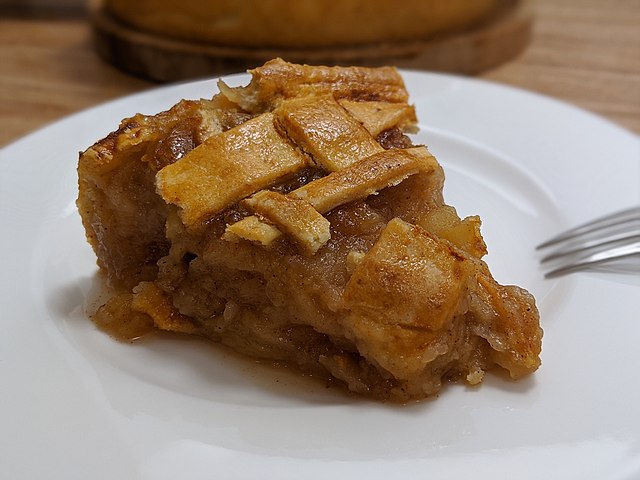
It was the lady from next door. We never talk to her. There’s no good reason we never talk to her. She handed me a plateful of pie. “Try it,” she said.

“Mmmm,” I said. “Delicious.”

“I sliced the apples with the new app,” she said.

“Wow,” I said.

“Can you help me dial an ambulance?” she said, holding her fingerless hand up between us. “I lasered them off.”

Inside, I discovered that my wife and child had lasered each other into piles of laser-sliced meat.

Somehow, those piles of laser-sliced meat were still capable of operating their phone lasers well enough to laser me into a pile of laser-sliced meat too.

Somehow, even as a pile of laser-sliced meat, I was able to call an ambulance for our fingerless neighbor.

Somehow, when the ambulance arrived, sirens blaring, there was a moment when it seemed like everything might be ok.

And in that moment, I looked at my laser-sliced wife and my laser-sliced child with my laser-sliced eyes. I thought, future, here we come.

Then an EMT dragged our screaming fingerless neighbor through the piles of us.


Rick Claypool is the author of SKULL SLIME TENTACLE WITCH WAR (Anxiety Press, 2024), THE MOLD FARMER (Six Gallery Press, 2020), and LEECH GIRL LIVES (Spaceboy Books, 2017). He lives in Rhode Island.