NF Prose by Josh Olsen

Spontaneous

My partner recently told me that she can tell I was mostly raised by my grandparents. She called me the oldest young person she knows. Or was it the youngest old person? Either way, her point was made. And I can’t deny it, as much as I’d like to try. I do appreciate a quiet night at home, devoid of surprise run-in or unscheduled interruption. Even when I make plans, well in advance, no matter how much I’m looking forward to it, whether it’s a concert, a baseball game, a poetry reading, or a live pro wrestling event, when the day of the show comes, I’d rather stay at home, and even after I’ve convinced myself to go, no matter how much I enjoy it in the moment, I’m happiest when it’s over. Katie told me that I lack spontaneity, and my response was that I experienced enough spontaneity in my childhood to last me the rest of my life. Katie rightfully groaned and rolled her eyes, her response whenever she felt I was playing the victim, and I said, “I lived in 20 different houses before I was sixteen!” My mom and my stepdad were spontaneous, spontaneous with their jobs and their bills and their fidelity and rent, and as a result of their spontaneity, we would spontaneously move to two or three different apartments in one year. During the first grade, I attended three different elementary schools (one of them twice that year), a fact that still makes my mother cry when I bring it up. All three schools were within the same school district, in Holmen, Wisconsin, a village with fewer than 10,000 people, but for a first grader in the mid-1980s, they might as well have been on different continents. For one of the schools, I was only enrolled a couple weeks, while I temporarily lived with my maternal grandparents (hardly the first or last time). I barely remember anything about it, except for pissing my pants one day because I was too shy to raise my hand and ask for permission to be excused for the boy’s room, but it turns out that my brief presence evolved into a bit of an urban legend for my classmates. One evening, in my early 20s, I was approached by a group of drunk college students (granted, I was also then a drunk college student) and asked if my name was “Josh Sather.” And, well, the answer was yes. “Sather” was my legal last name before I was adopted by my stepdad, when I was in the second grade, but for these strangers to know me by that name, it meant they would’ve had to know me before then. So, yeah, I am Josh Sather, I confessed, and my answer was met with an explosion of laughter and profanity. “Holy shit, where the fuck did you go?” one of them asked. “What the fuck happened to you?” another slurred. “I told you he existed!” said another. As it turns out, this gathering of intoxicated individuals had all gone to school together, from kindergarten through their senior year of high school, and my two weeks in their classroom, in first grade, was like a blip in their collective memory, like a shared delusion. The weird, quiet, ambiguously ethnic apparition who showed up, unannounced, in the middle of the school year, and then vanished without a trace, just a couple weeks later. Did that even happen? they’d joke amongst themselves, Was he even real? And finally, it was confirmed, like the existence of Bigfoot. Josh Sather lived. “And that,” I proclaimed, “was the result of spontaneity.” Katie just looked at me and yawned, and then so did I.

At the Drive-In

I told my mom that Katie and I were at the drive-in, and she had plenty of romantic advice to give. “Buy her some popcorn, put your arm around her shoulder, hold her hand, and kiss her on the cheek,” she told me, as though this was our first date, and Katie and I hadn’t been together for over 18 years, and raised two kids and a dog. I read my mom’s text to Katie, and she sarcastically gave me the finger.

“Do you remember when you took me to American Werewolf in London?” I asked my mom, and she immediately began to apologize. When I was about 2 ½ years old, my mom took me to the drive-in theatre, with her then boyfriend/friend who was a boy, to see John Landis’ American Werewolf in London. I was obviously too scared to watch the whole movie, and almost immediately began to cry at the sight of Rick Baker’s groundbreaking, Academy Award winning horror effects, but it was one of the most formative memories of my childhood, and likely why I’m such a horror fanatic to this day. “Your grandparents weren’t always so perfect,” my mom said, attempting to change the subject. “They took me to the drive-in to see The Graduate when I was 7 years-old,” she said. She said watching the love scenes in the car with her parents was one of the most embarrassing experiences of her life, and she still hates Dustin Hoffman for that very reason. “That’s great,” I said, “you should ask grandma about that,” and once again the texts began to pour in. “You can never do that!” she said. “Grandma would be so mad. She would deny it. Don’t ask her about it. Promise me you won’t ask!” she begged via voice-to-text, and I promised her I wouldn’t ask.

“What a shame,” I said to Katie, “to be almost 60 years-old and still not feel comfortable talking to your only living parent like an adult … Remember when Jackson puked at the drive-in?” I suddenly recalled. Our son was barely one year old, and we had taken him and his then 6-year-old sister to the drive-in theatre, to watch Charlie and the Chocolate Factory. Katie had just finished feeding Jackson a bottle, he had just recently stopped nursing, and when she sat him up on her lap, to be burped, his entire stomach full of breast milk emptied onto the dashboard. Perhaps needless to say, we didn’t stick around to watch Johnny Depp’s performance as Willy Wonka, with Katie and Jackson soaked in hot, curdled breast milk, and his sister, Gabriella, throwing a crying fit over having to leave the movie early.

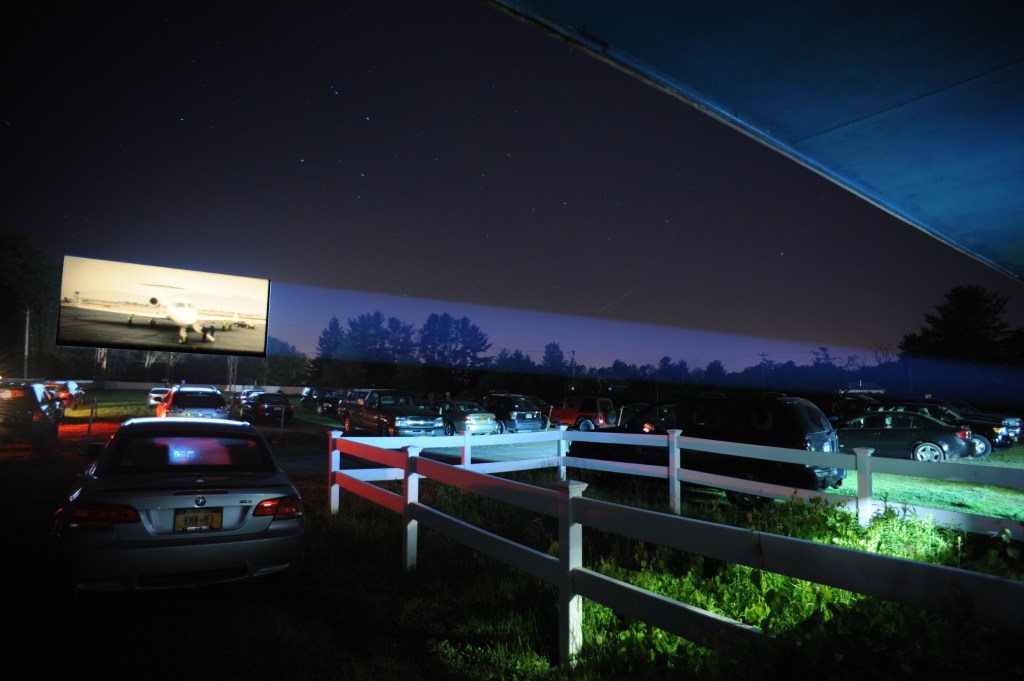
Well, on the night of July 3rd, Katie and I didn’t have any kids with us at the drive-in. It was just her and me, our first movie together, alone, in god knows how long. It didn’t even really matter what movie was playing, it was just good to be out of the house. “In the car, but out the house,” Katie posted on Facebook. All around us, even while the movie played, thunderous fireworks lit up the horizon. “Next time we’ll bring booze,” we promised each other, and sighed in relief when the credits rolled and it came time to crank the air conditioner.


Josh Olsen is a librarian in Flint, Michigan and the co-creator of Gimmick Press.
2 Liver Mush Poems by Graham Irvin

I WANT A LIVER MUSH WEBSITE 

i want a liver mush website 

www dot liver mush dot com 

i don’t need to build it myself 

anyone can build www dot liver mush dot com

i just want to read liver mush dot com every morning 

after i read pitchfork and a blog about jeans

i want liver mush dot com to replace twitter dot com

the headlines will read “liver mush dot com is the most popular website ever”

“liver mush dot com in works to purchase facebook dot com” 

liver mush dot com tastes like selling your soul to make a friend and i’m here

for it 

once liver mush dot com exists there will be subcultures on liver mush dot com

ingroups and elites and innovators making liver mush dot com their own

weird liver mush 

alt lit liver mush 

podcasts hosted by liver mush personalities

a new yorker article getting it embarrassingly wrong 

quote liver mushes on liver mush 

re liver mushes 

sub liver mushes 

“the creator of liver mush dot come deserves the guillotine”

everything runs its course

“the creator of liver mush dot com is hiding at a mountain retreat meditating 

on the vaguest bullshit you can imagine”

the creator of liver mush dot com abandons all thought of liver mush 

we have to deal with it now

good luck 

CHRIST’S BODY BROKEN FOR YOU

a slice of liver mush crumbles

under the spatula’s pressure

as i try and flip it


Graham Irvin lives in Philadelphia, PA. His column, SOUTH x SOUTH JERSEY, is at BULL: Men’s Fiction. He has other writing at The Nervous Breakdown, Maudlin Press, and the Neutral Spaces Blog. His twitter account is @grahamjirvin.

“The Unraveling” by Maggie Petrella

The unraveling began when the barstools I bought on craigslist were too short for the counter. I laughed at the thread rustling out of the side of me. That was a sign, but I didn’t know. I just tucked the string back into the seam and the stools under the ledge, and went about my day.

The loose thread rippled my fabric gently, quietly. I felt the cloth twisting in my ribs as I held my breath in the middle of the night, wide eyes staring into blackness, trying not to move. The whiskey tugged at the strand mildly at first, but pulled harder and harder every night. In time, molten liquor burnt reckless holes in the swatches.

I wove apologetic patches. “Sorry” makes everyone feel better, even if it wasn’t my fault. I would hem delicate sheer shrouds with heavy yarn, thick and sweet. I could tell that something was off, but it held me together for a time.

The last stitch unwound itself on the day I moved out. My new apartment is an unwrinkled bolt of whatever I want it to be – wool, lace, twill, joy. I hang silence like bunting on the walls, to brighten up the place. I took the barstools with me.


Maggie Petrella (she/her) is a poet based in Buffalo, New York, but currently probably lost somewhere in the continental US. Her poetry has appeared in Detritus Online, dreams walking, and The Daily Drunk Mag. She tweets @maggie_425.

2 Poems by Kim Kishbaugh

I like my life but it’s unexpected
After Erich’s tweet

college degree, $100,000 in debt, slinging coffeehouse lattes at privileged mommies and daddies whose kids want cake pops and won’t be quiet till they get them

scan the job ads looking for a way to put four years of rhetoric and econ and history classes to use but there’s 1400 other college grads and laid-off middle managers competing for every one 

I want to do good in the world, make change, care for my parents when they grow old – but right now that looks more like someone else’s future or maybe no one’s

look around it’s the same for everyone, nothing special about me, a whole generation getting skilled at punching cash registers and clearing drinks from tables, thank you ma’am just happy for the work

my best buds have had bad jobs, no jobs, gone back to school hoping it’ll be different the second time around, most of us still living with our parents, sleeping in the same beds we had before puberty

friday nights I’m cleaning locker rooms at the high school picking up the left-behind jock strap of some kid whose future I can predict cuz I’m living it now

don’t get me wrong – I like my life 
but it’s unexpected

RIP Munchkin

Spoon-feed a sick hamster
from a jar of baby food
and you, too, will form a bond

Days later, when she dies on the table
during surgery you never imagined paying for,
you, too, will cry

Then you’ll stifle your sobs and sniffles,
collect your child from school,
and prepare to break the news

Later, you’ll gather your family around the dining table
still mourning, and draw together, 
pictures of hamster memories

One will become the memorial card
your child hands to friends
to harness his grief and theirs


Kim Kishbaugh is a former journalist whose poetry and other stuff has been published in some places, including here on the Back Patio. She wanders through the world looking for magic and sometimes finds it. You can find her on Twitter and Instagram: @kkish.

“The Congress of Wonders” by Mike Lee

That morning, her birthday, Nina went to pull the curtains back and open the window to the backyard.

Her heart throbbed as she crossed the fake wood in the house she just bought, stepping barefoot across the living room. The floor was cold

She had a secret place in her heart where the rain cannot enter: a chamber to place every emotion from happy moments to the tightly wound up heartbreaks locked away for her to sometimes massage.

As she went about her business, from brushing her teeth in the morning to those occasional rough nights clutching her stuffed koala bear, well-loved since babyhood, at night, Nina felt every trace memory deep inside, stashed away in that place.

On most days, now counting into five digits Nina filed something away. Some weighed lightly, others not so.

She does not remember when she began putting these things away. Maybe six or nine years old, perhaps five or three, but whenever it began, something was put away. 

Today was her birthday. Lucky her, she thought. She glanced at the framed poster from a rock show in San Francisco the year she was born.

It was called The Congress of Wonders. At the performance, Kenneth Anger showed films. When Nina was older she loved Puce Moment, wanting many colorful clothes like the actress, and many big dogs to walk down the stairs from her magical bungalow in the Hollywood Hills.

Her parents met there, or so the story goes. She has no photos of them on the walls. They are in two boxes, one on a shelf in the hall closet.

The remaining images rest deep inside that box.

She began to part the curtains, saw the bluebonnets were in bloom. They got lively early. The winter fled early this year. The yard needed work, especially the fence. The weathered planks were coming undone and falling away. Looked bad. Tawdry. Didn’t want the neighbors to talk behind her back any more than they already did.

Nina did not like her neighbors. They were from another time, triggering bad memories of her parents. Violent at worst, passive-aggressive and neglectful at best, Nina felt unburdening relief when first, then the other, died.

They crafted the box in her heart. Parents do that, you see, she would tell therapists over the years, sitting on comfortable couches, or lying down staring at chartreuse ceilings. Going over every slight, at every level of painfulness, always tying to breakthrough, hoping to break open that box deep inside and dump everything out.

Just never quite got there.

She sometimes called herself the saint of the abyss. Her standing at the edge, visualizing suicide but never quite got near the point of actually doing the act, instead occasionally musing on the concept. One psychoanalyst finally convinced her otherwise that it was an act of murder only to hurt others. Nina took it as a reminder that she didn’t want to hurt her parents—only make them admit fault.

At the time she came to that conclusion, it was too late for them to see. They had died long ago. There was no point, so Nina resolved to plow through, while continuing to add near-daily memories to the box.

The dead didn’t give a shit, so neither did she.

She moved to the sliding glass door. The magnolias were blooming early, too.

As she bent to pull the pole that locked the door she felt the box. It felt burdensome more than usual this morning, rustling restlessly. She felt heaviness in her chest, and she caught her breath. This happened sometimes, presaging a panic attack.

She struggled to slide the door, reared forward and coughed. It was one deep heave, and what came out felt like fire.

When came to, she was on the ground, surrounded by bluebonnets. The wind had picked up, and she saw her hammock swinging in the breeze.

She felt light, and immobile. Nina moved her fingers to her face, sliding them down across her cheek. Finally, she moved on her side, caressing the bluebonnets with fingertips. She was taught never to pick them. Too unique, and they don’t last very long in bloom.

A square, hand-carved cedar box was beside her. Small, and very old; Nina recalled it was on a nightstand in the house they lived on St. Elmo. All she could recall from then was the curved stucco entries.

But the box–that she remembered well on her parents nightstand.

Isis winged. Freed.

Later, after placing the box with the photo albums and loose papers, placing them back on the closet shelf, Nina took a shower. She dressed, grabbed her journal and drove to the coffee shop to write.

Her friends planned a karaoke party for her later. She looked forward to it. Put on a puce dress she hadn’t worn in a while for the occasion.


Mike Lee is an editor, photographer and a reporter for a trade union newspaper in New York City. His fiction is published in Back Patio Press, Trampset, Lunate, Ghost Parachute and others. Website: www.mleephotoart.com. He also blogs for Focus on the Story.

2 Poems by Based Mtn

Blade Runner 2069
Our sleek, candy and blue lit, forged-cast titanium pizzas are mind meltingly mouthable and come with your choice of sides, like fried spanners, everything the wired doll needs. Necromancy in case of malfunction is not advised.


Aqua Vitae
Emotionally numb, I walk, down, down, down, into the ocean. The vampire squid are in bloom. I can’t extract soluble oxygen. Don’t wait up for me. 


based mtn is a poet manque from Sydney, Australia

“Do Aliens Paint Their U.F.O.’s?” by Logan Roberts

When I was in high school, my friends and I were vandals.
We talked about burning down a house, 
spray painted penises on dumpsters,
and on more than one occasion,
a crowbar would scream into a mailbox.

One time, we filled a milk jug with old paint
we found in the basement.

We put it out in the middle of a busy road
really early in the morning.

We hid in the bushes for like,
20 minutes.

Just as we were losing hope, something happened.

It was straight out of a science fiction film—

a tractor beam started dragging the jug into the sky
towards some hazy blue lights hidden in the clouds.

I still wonder today, why?

Why do aliens need paint?

I thought they liked butts and corn.


Logan Roberts is an artist and poet from Ohio. He tweets @hello_im_logan.

“1984” by Jason Love

In 1984 we watched music videos of 
Van Halen on MTV.  
1984 was the year of  
Michael Jackson, Ronald Reagan, Farrah Fawcett,  
and Andre the Giant.  

Eddie Van Halen died today.  
Like the King of Pop, Reagan, Farrah, and Andre,  
Eddie no longer walks the earth.  
He was 65 years old  
and a rock & roll giant.  

1984 was only 36 years ago   
(which is essentially a lifetime).  


Jason Love still lives in New Jersey. 

“Permanent Punctuation” by Tex Gresham and KKUURRTT

Shovelling handfuls of sand into my mouth like it’s going out of style. It ain’t headed anywhere, but I’m straight up starving. Somehow this is upsetting my stomach worse. Chugging ginger ale to ease the pain of living, laughing, and loving, and yet it’s all supposed to be good in the hood. So why can’t I stop? Shirt bursting at the seam, buttons hand-sewn in Hawaii popping off like a party at Mike DiRenzio’s house. Talk about an hourglass figure. You’ve got to be kidding me.

The man steps off the beach for the last time. He can’t help but think of his life as a sequence of moments in a plot, the string connecting those moments nearing its end. The handgun shifts.

It’s ironic. The idea of driving a hundred and fifteen miles just to sit on a patch of grass (except minus the grass (and the dirt) and replace them both with miles of miles of sand even though we’ll never really know how deep sand even goes, digging through without it just falling back in on itself is one of life’s great impossiblities) to look at the ocean and say ‘good job’ before getting shot in the head pow pow two bullets to the back hitman style (you gotta check out this movie Boondock Saints it’s sick as fuck, bro). I’m falling, sand filling the whole above, limbs flailing, this shit taking a full on eternity. I think I get it now.

The man doesn’t think of himself as a man, but rather a space that occupies spaces. Something in between, something that stops––a force other than self. Maybe he isn’t a man. Maybe he’s a woman. Or maybe he’s neither, a being without center. Imagine being so determined by one event that your identity becomes the event and all you are is the thing and not the person outside the thing. Thirteen in the magazine. Imagine only categorizing your life by an event. One in the chamber.

The obituary read something like this: 

Don Williams was born and raised in Middleboro, WA. It’s not known by this reporter if he enjoyed getting shot in the head or not, but we are forced to assume that he did not. Was it his dying wish, or perhaps, more complicated than that, something he never even considered? There are limited resources at our disposal without a social media account with which to determine a lifetime lived. Shortcomings must bid adieu in the case of the senseless beach death. He might be missed. He might not. Our sincerest apologies; this is not our finest hour.

The man––or the shape in the shape of something coming––looks at the address in their hand. Written on the back of a napkin for a nearby gas station that serves fish tacos in the back room. An address passed to the shape like a bad idea you can’t shake. A secret never to be intervened against. The shape looks at the houses on the street, titled shacks with addresses hidden behind tropical overgrowth, the chaotic music of a flock of green parrots hidden in the palms towering above the healthily cracked street. Cars half-rusted by salt heavy air. Then the shape sees it, a little yellow one-room, front door open to let in the breeze. Sounds of splashing from the backyard. This is the moment the shape takes the handgun from the waistband of pizza-print swim trunks.

Literally. That’s the word I’ve been thinking of. Couldn’t remember it for the life of me. Literally the worst thing that’s ever happened to me. Such a simple word, how could I forget it? Something’s wrong with my brain, losing bits and pieces through a hole in the back. How am I supposed to remember the details when I’ve never even known–fuck–forget the thread again. That fear of not remembering your locker combination but it’s my home address and all I’m able to do is wander these streets for nigh on a hundred years. Only dogs can see me now.  

The shape follows the narrative string to the inevitable, unable to step away or remove themselves even if they wanted to––forced into this by an unseen hand typing each next step. Typing, the sound pulling the shape toward the backyard. Old typing. Not the modern weak click of laptop keys, but the heavy mechanical thud of vintage history. Smith Corona or Royal. Ink to paper through violent punctuations. Permanent. And the splashing, shallow and playful. And the laughter––or giggling, someone who’s just tricked the warden into an all-you-can-eat last meal. The handgun’s a Glock G23 Gen 4 with a shortened trigger distance, Trijicon red-dot sight, trigger pull of less than 5lbs, extended suppressor, Longhorn slide pull charging handle, and a magazine loaded with jacketed hollowpoints. A dog barks somewhere close. A child laughs somewhere far. 

The shape looks over the fence and sees him––the writer. Sitting in a kiddie pool, naked, portable Smith Corona typewriter in his lap. He types a set of phrases, says “Literally” and giggles to himself again. The shape points the handgun at the writer, a forensic string connecting the end of the suppressor to the back of the writer’s head, evidence to later map the bullet’s trajectory, an effort to find a killer who’s already a ghost. Five pounds of pressure against the trigger. The shape takes the inevitable shape. All this is is sound and silence.

Oh shit wait what’s happening? Uhhhh… hello?


Tex Gresham is the author of Heck, Texas (Atlatl Press). He lives in Las Vegas with his partner and kid. He’s on Twitter as @thatsqueakypig and online at www.squeakypig.com.  

KKUURRTT is glad you read his thing. His novel Good at Drugs is forthcoming
from Alien Buddha Press. He can be found on Twitter at @wwwkurtcom.