The F*cking Birds by Jenn Salcido

Oprah Winfrey can tell you about the great bowerbird; the queen of all media seems impressed, for what it’s worth.

I once had this nature documentary on DVD, is how she was talking to me. I heard her narrating its courtship rituals, watching while it built its sex tent. Beautiful twigs, fine beans, pearlescent berries dot the floor of its woven house, waiting for some ladybird to pass by. Oprah calls it a common bird, and I don’t know how she can say that with a straight face. It’s like a diabolical realtor, selling dreams to its many mates. This could be yours, the bird whispers. No money down.

When birds fuck, they hover, kind of.

It’s not like rutting, not like banging until the bedsprings break. It’s gentle and dignified and over in a flash. That part isn’t fun for anyone, sure, but it’s better than watching a frog laboring through the murk of a pond, carrying another angry frog on its back. It’s better than watching a tomcat rape a tabby. Like all things with birds, there’s only a suggestion of movement – a shadow of lovemaking.

You wonder whether you actually saw it happen, or if you were misunderstanding. If you blinked, you could still convince yourself that you’d seen it. Have you ever seen a hummingbird, or thought you saw a bug, only to realize it’s a hummingbird? That’s one of their greatest tricks – we’re never sure what they’re up to; they’re not as vulgar as we are, not all about airing their dirty laundry.


Jenn Salcido is a writer based in Los Angeles, CA.

The Rising Sun by Alannah Guevara

A tree hangs loose in autumn breeze

Listening intent for the next truth to make itself apparent

Whetting its roots against the blue river pebbles

Thirsting for an opportunity of adventure to arise

Perhaps, the next bird will bring more than the scent

On the back of its wings

Perhaps, the earth will hear its pleas for freedom and—

—wait, wait, are you even listening to me?

No no no, I mean it; don’t try to play dumb

You totally checked out

You looked like fucking Linda Blair with your eyes rolled back

And I definitely saw you wipe the drool from your lips, you nasty

Am I that boring to you? That you can’t even sit through

One goddam poem about the wonders of nature without tuning out?

Have a little respect! I pull my teeth crafting this shit

I agonize over the placement of words that so few people read to begin with

And you just march on in here and pretend to read my poem

For fucking what? What the hell were you expecting to find? Because

I sure as hell ain’t the next McCarthyBukowskiEliotSalingerWhitmanPlathBurroughsFuckwadMcgee

I. don’t. even. want. to. be.

All I want is to write plucky little poems without bleeding myself dry

But voyeuristic assholes like you just want to see me suffer

Right? Admit it. You came here to get off

To watch another living, breathing, feeling human being

Take a rusty fucking scalpel to the abdomen, dig jagged and deep

Slowly, methodically, orgasmically

You want me to pull, inch by inch, intestines from the gash

And arrange them on the page, just so, in a beautiful, grotesque cursive

That describes, in cancerous detail, the searing pain

That I swallow like a hunk of meat in my windpipe

So you can watch me choke sans culpability

Well, that numbness you feel—I refuse to be your metaphysical therapist

You’ve been so desensitized. It’s actually sad

You used to enjoy poetry about beauty and love

You used to connect with joy and the rising sun

But you’ve become so twisted, don’t deny it

You’re searching for snuff and you don’t even have the self-awareness to use incognito mode

You sick fuck.

Well, fuck you. You wanna feel something for once? Here’s my scalpel

It’s yours for the taking

But you’ll have to show me the blinding pink of your insides

And let’s just see what comes out.


Alannah Guevara is a poet-wife and vilomah. Find her published works by floating around in the aether (or in Revolution John, Isele Magazine, Toyon, and Rejection Letters). Alannah is the editor-in-chief of Hunter’s Affects: a lit mag for deadheads. Alannah is on Twitter @prismospickle.

2 Smallies by Lamb

THE FRIDGE MAN

At the end of the day, all I want to do is beam from Alexa to Alexa, going through the fridges of Americans. I want to taste their days and guess the strength of their relationships based on what’s in there. My good spoon and I would sample every half-gone fruit spread in the country, straight from the jar, learning by experience the difference between jellies, jams, preserves, whatever. You couldn’t tell me anything. I’d guess the items inside before opening the door, picturing the shelves, the sauce racks, the hinging plastic shell. I’d eventually get lucky and guess every product in the Hotpoint of a performance marketer while he slept on the couch in the other room. He’d hear me celebrating, making eggy ramen in his kitchen. He’d flick the light on and rub his small eyes. “Fwidge Man? Is that weally you?”

HELP ME OUT HERE

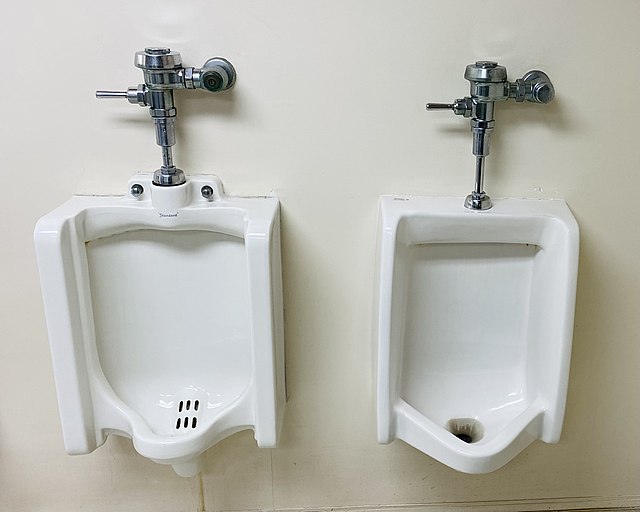
I’m at the urinal in the WeWork men’s room when a guy rests his chin on my shoulder and sighs. He has a gelled part in his black hair and the ideal suggestion of cologne. I tuck away my member, but I don’t push him off or leave just yet. It’s been a while since I’ve felt this needed.


Lamb is an American writer // web: lamb.onl , twitter: @read_lamb, insta: @lmbonl

OSTKREUZ by Thomas Huntington

the shape was a lower case ‘l’

or maybe a tick

a bit of lettuce

made of plastic

:in a pile of my spit on the wall at OSTKREUZ

think thin plastic

like you could stretch it around but

it would retain its shape unless

you stretched it too much

I was wearing a HD camera 

strapped to my head and 

looking through the viewfinder

I had made a very good/not very good

attempt at fitting in

I touched it to make sure

very gently so it 

wouldn’t freak everyone out

but everyone was 

already pretty freaked out


Thomas Huntington is a writer from Melbourne, Australia. He has written for Grattan Street Press, Apocalypse Confidential, Post-Human Magazine as well as a column for Bruiser Magazine. He is the founder and indentured servant of Soyos Books.

12 Poems by md wheatley

Closing your eyes
Doesn’t mean
Life doesn’t happen

*

I can see
Thru the window
The world in bloom

*

Theo said,
Don’t worry. Don’t stew.
You’ll start happening too.


*

God said,
Watch me light this shit on fire
(Talking about the sky)

*

What if
I cut off my ear
Like Vincent?

*

What if
We kissed
In front of Mona Lisa?

*

What if
Words that meant a lot
Still mean a lot?

*

What if
The stratus blanket
Fell and smothered us?

*

Dog spelled backwards
Is God
But you knew that

*

Enuf spelled backwards
Is fune
Which isn’t a word

*

Thinking about
That Cummings line of poetry
Tattooed on Tiny’s arm

*

Thinking about deth
Because how do you
Not


md’s a husband, father, and writer living in charleston, sc. he wrote a book called what a heaven could feel like. he’s currently working on 2 more books. visit his website at mdwheatley.us.

Art credit: Mike Andrelczyk

Review of Graham Irvin’s I Have a Gun by Hank K Jost

The man that taught me to read proper was a fairly distinguished professor in Indiana University’s Comparative Literature department. He was held in well enough regard to have been trusted not only to teach rhyme-blind wannabees like myself, but also to have been given the King James Bible by Norton for to clean up. I do not know if he’s still alive. All I know is he could turn a line of Wallace Stevens into an uninterruptible two-hour lecture. That ancient and corduroyed exegete held it as gospel that ‘Poetry is language operating at its maximum capacity…’—but, this Irvin fella’s gotta gun and says I ought to write about his book, not my incomplete course of study.

In so far as language’s capacity is concerned, you’d be hard-pressed to find four words more full-up (which is to avoid saying loaded) than Graham Irvin’s titular declaration—I Have a Gun. To riff on Irvin’s premise: a six-shooter revolver, of whatever make and model you wish, is only at its maximum capacity when it’s loaded. Unloaded, it’s a paperweight at worst, a blunt impact weapon at its best; it could perhaps also be, depending on the owner’s temperament, decorative, a keepsake, a hollow intimidation, or, hell, a phallic compensation. These are all aspects of Graham’s object, and I Have a Gun explores most of them in a fashion that is obsessively thorough. This example, though, this loaded pistol doing its damnedest, doesn’t quite hit on capacity the way I mean to make it mean in terms of Poetry…

I had a gun. I’ve had several, being honest. But only one stands as metaphor for the spirit of Irvin’s text—indulge me here, Graham, keep that finger off the trigger if you can, I’m building something here—the gun I had was an Ithaca 12-guage. I got it for my twelfth birthday, I believe. My father and I bought it at a pawn shop in Statesboro, Georgia. Special thing about it, other than its being mine and significant for that fact alone, was that it came unplugged. This is some illegal ass hick shit, but keeping it short, unplugged means the sucker was modified in such a way that I could load it past the legal limit of three shells. I think it was nine I could get in there at a time, maybe twelve… depends on how big a boy you are. Another uncommon feature was its slam-action. No pump, jack in the next shell, and pull the trigger. Just pull the trigger, Boom!, hold the trigger and pump until she’s emptied out. Last thing, the monster didn’t have a choke, just raw cylinder, so the shot come out spread all the way from the get—That gun was Poetry. Nothing added to it, just shit taken off it—unplugged, unchoked, unsafe—paired down to its maximum capacity.

This is the fundamental strength of Irvin’s project—this pairing down. Irvin truly understands his subject’s immediacy. His central image, the gun of whatever changing sort, is an object jam-packed not only with meaning, but with consequence. The title’s threat serves a time-breaking, future-opening function of fantasy. Once the gun is, once the poet has given it to himself, and once he’s told us he’s got it, there’s not much more that needs to be said. Irvin’s poetry, line by line, keeps itself lean for this sake. All that needs naked utterance is, and will always be, ‘I have a gun.

True or not, this utterance shatters the world. Irvin plays his game among the broken pieces of a formerly placid reality. Threat leveled, the first three sections of Irvin’s collection do the work to parse out every register his four frightful words, culminating—to my reading—in a longer poem nestled in the third section: 

‘…but it’s all for naught 
since they’ve shriveled [re: the narrator’s testicles]
to butter beans
because there’s an inherent 
well-established inarguable 
customer-worker hierarchy 
if only there was
a way to change this 
maybe a gun 
ha ha 
I don’t know 
it could work 
maybe…’

If only a gun—then everything would turn out as it ought to. The fantasy. The presence of a powerful object to immediately render null the world as it’s come to be, to further shape it in the image of the weapon’s wielder.

Now Irvin gets to the real work: What of this fantasy? The metaphor of the gun falters for there being, in reality and among the living, guns and bodies left bleeding. 

Onward from the fourth section of his collection Irvin sets about a blending of form—The opening salvo of which is a jarring dip into prose. There’s an oft-quoted sentiment from Faulkner about the hierarchy of literary form, something along the lines of every prose writer being a failed poet; if I am to be critically transparent, it must be said here that this sudden eruption of prosaic languor in a work so swift and terse was not warmly greeted by my reading. But Irvin’d made an ironclad case toward trusting him in the first chunks of his book, so any kind reader must continue on and follow the man… He’s got a gun, after all. Do as he says, and no one gets hurt.

I hold it as a sacred tenet that the prime responsibility of the poet is to do as Whitman does with himself on the Brooklyn Ferry: Make one’s subject universal. Metaphor is the force in language which stitches the pieces of reality into its whole—it makes the one many and the many one. This is no small task. Even with this conviction held tight, pushing through Irvin’s sudden change in mode, the feeling that the poet has in some way failed ebbs to ease.

The gun’s potential as poetic object—once we’ve taken every dick joke and run the gauntlet of comic violence—must come into question. The limits of the thing must be dealt with. A gun is no rose, it is no image on a Grecian urn… No crucifixion… No road less traveled…

From the recurring character of a Belgian arms manufacturer during Nazi occupation to tender personal history, Irvin drags us through the shift from myth to experience, then from narrative to data. This is Irvin’s greatest turn: Instead of rendering the gun as any other poet would, somehow making it mean everything, he shows us its banality, its ever-presence in our culture and history. Irvin need not universalize the gun—it is imminent. It is already a small, angry god.

By the end, as if the lowering of register from Poetry to Prose wasn’t heartbreaking enough, Graham starts to list. For the sake of fun ranking games, the List must be the lowest of forms. Those that do it well, that string together innumerable word-objects in a manner that is at all compelling, are hard to find and often, if at all modern, of an ancienter temperament—Whitman, again, comes to mind. Robert Burton may be the ultimate master of the list, but I’ll never finish his book. Irvin is aware of his list’s banality, popping in occasionally to check on the reader, taunt them, plead with them to just keep going and allow the information to sink in. Gun against your head, don’t stop reading: 

‘…On January 18, one person was killed in a mass shooting. On January 19, three people were killed in a mass shooting. Do you feel a cognitive dissonance between the word “mass” and the number “one?” On January 23, ten people were killed in a mass shooting. I know what you’re thinking: “Thank God I get to properly mourn.” On January 27, one person was killed in a mass shooting…’

There’s no small amount of grace between Irvin and his reader. He’s chosen a tricky subject, and his voice is not one that comforts. Though the book comes to final rest with a series of haiku, formatted as to seem afloat on the page, the project continues on his Twitter: 

BELIEVE GUNS
9:46 AM · Jan 21, 2024 

A GUN SHOULD WIN THE NOBEL PRIZE
9:39 AM · Jan 21, 2024 

YOU’RE IN HER DMS I HAVE A GUN
10:15 PM · Jan 17, 2024 

IF A GUN IS WET THAT SYMBOLIZES BAPTISM WHICH IS A TYPE OF REBIRTH OR IT’S HORNY
10:41 PM · Jan 17, 2024

FAST GUN BY TRACY CHAPGUN
10:07 PM · Jan 17, 2024

THE SHORTEST VERSE IN THE BIBLE IS GUN WEPT
9:25 AM · Jan 17, 2024

And the joke comes full circle. The gun is everywhere. It is our reality. Nothing near a poem…

You can put it down now, Graham. I’ve finished. I liked the book. Quite a lot.

Easy does it…


K Hank Jost is a writer of fiction born in Texas and raised in Georgia. He believes language is the only remaining commons, and through its meaningful deployment all lost commons may be rendered fresh. He is the author of the novel-in-stories Deselections, the novel MadStone, and is editor-in-chief of the literary quarterly A Common Well Journal–produced and published by Whiskey Tit Books. His fiction and poetry have been recently featured in Vol.1 Brooklyn, The Burning Palace, and Hobart. He is currently seeking representation for his newest novel, Aquarium, while he works on his fourth book. He has led fiction workshops at the Brooklyn Center for Theatre Research and writes event reviews for the New Haven Independent. Residing in Brooklyn with his partner, he reads as much as he can, writes as much as he can, and works as much as he must. Instagram: @hank_being_a_better_ape Twitter: @hank_jost

Update by Rick Claypool

My phone downloaded an update and now it shoots lasers. I noticed after I heard people talking about it at the bus stop. A guy on a bench in a hat like an oversized inside-out sock said, “Check out this shit.” Then he accidentally lasered off this old guy’s leg. He crouched over him and kept saying, “I’m so sorry, I’m so sorry,” as the old guy convulsed in the patch of grass where people let their dogs shit.

The bus was emptier than usual. An unusual number of buildings we passed were on fire. I saw some kids run down a side street carrying severed heads by their hair.

At work, nobody had turned on the coffee pot yet. Some of my co-workers were always saying the company should spluge on one of those machines that brews coffee instantly out of little disposable pods. Seeing the empty pot and realizing I didn’t know where the filters were kept or if the pot needed washed, I understood.

I found my colleagues in the conference room crowded around the flat-screen TV. Onscreen, an expensive car wound over mountains and past rock formations and disappeared into the desert. Then: live coverage of laser chaos in schools, airports, grocery stores, movie theaters, hair salons, and Congress.

The boss never showed up. No one got anything done.

That night in the middle of dinner, our kid pulled out his phone.

We said, “No phones at the table.” He acted like he didn’t hear us.

Instead of him putting his phone away, my wife and I suddenly discovered we had our phones out too.

Then the doorbell rang and we all jumped. It’s a loud doorbell.

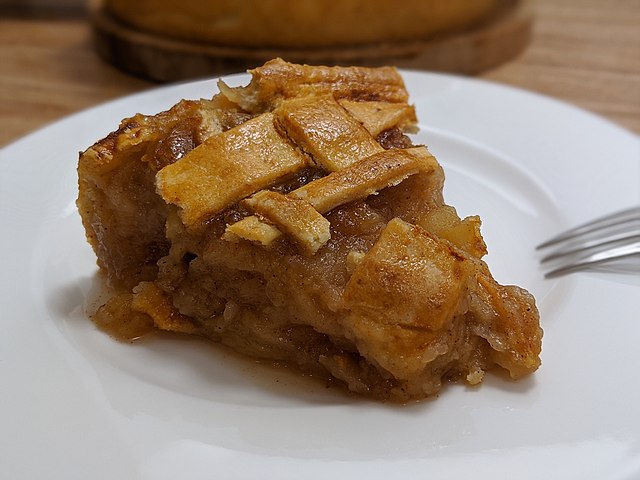
It was the lady from next door. We never talk to her. There’s no good reason we never talk to her. She handed me a plateful of pie. “Try it,” she said.

“Mmmm,” I said. “Delicious.”

“I sliced the apples with the new app,” she said.

“Wow,” I said.

“Can you help me dial an ambulance?” she said, holding her fingerless hand up between us. “I lasered them off.”

Inside, I discovered that my wife and child had lasered each other into piles of laser-sliced meat.

Somehow, those piles of laser-sliced meat were still capable of operating their phone lasers well enough to laser me into a pile of laser-sliced meat too.

Somehow, even as a pile of laser-sliced meat, I was able to call an ambulance for our fingerless neighbor.

Somehow, when the ambulance arrived, sirens blaring, there was a moment when it seemed like everything might be ok.

And in that moment, I looked at my laser-sliced wife and my laser-sliced child with my laser-sliced eyes. I thought, future, here we come.

Then an EMT dragged our screaming fingerless neighbor through the piles of us.


Rick Claypool is the author of SKULL SLIME TENTACLE WITCH WAR (Anxiety Press, 2024), THE MOLD FARMER (Six Gallery Press, 2020), and LEECH GIRL LIVES (Spaceboy Books, 2017). He lives in Rhode Island.

Nobody told me about Sisyphus until just now by Rebecca Grace Cyr


My very own personal puppy is the size of a teacup. She will stay that size forever. I hold her in one hand and hold her purse in the other and everyone is so jealous of me. I keep telling them back off. I keep telling them don’t touch. I keep telling them some day the puppy will be full grown and she will come and kill them. But the puppy will never be fully grown. My very own personal puppy is the size of a teacup and she will never be full grown. When I go to bed at night, the puppy curls up on a pillow above my pillow. She watches over me and the apartment because the puppy never sleeps. Sometimes I wonder if the puppy still gets tired or maybe even wants to sleep, but can’t, and so is stuck in this endless state of being that is like rolling that rock up that hill. Then I stop wondering about her and I go back to sleep. She gets cold because she’s so tiny, so I took up knitting little scarves for her. She doesn’t like sweaters but she will do a scarf. It drapes over her body hamburger style and she lets the bottoms drag as she walks from room to room. When I put her on a leash and she pulls in one direction and I pull in the other, she levitates. She lifts off the ground from the tension of the leash and for a second, you can see so much air beneath her. In those times, the scarf no longer drags on the floor. They both float. I try to imagine what it would be like to be her and have the world so big, but I can’t do it. I try to imagine what her food tastes like when she crunches down with her tiny tiny teeth and what kind of flavors she’s experiencing if they aren’t the ones I’m having, but I can’t do it. I can’t imagine the world so big, or those flavors I’ve never tasted; I have always had a hard time getting outside of myself. Before she tucks me in at night, I look into the puppy’s eyes and try to imagine her happy, but I can’t do that either.


Rebecca Grace Cyr’s writing has appeared on Maudlin House and Muumuu House. She has a substack (urban germ) and a twitter (@madamepsycho_)

WHEN I SAID UNCLE by Gabriel Hart

My mother flew in—
we drove somberly
from all direction
a reverse vacation
emergency
uninvited and overstaying
its welcome

over the river
a bridge too far
Grandma’s daughter
announced our arrival
yet we are lost
in spite and
inside of
uncle’s spiral

he bled her dry
feeding her nothing
except burnt toast
so at least she’d stay alive
and to keep her warm
he gathered enough garbage
to block out the sky

Not a home, but a pigsty
where not even the rats
could stand a chance
among the mice, mummified

and why
are there hundreds
of rusty knives
beneath his bed
next to photos of women
he took
in various stages
of undress?

We attempt to clean
but stay busy
gagging
dry heaving
with nowhere to turn
is it bile
or another
lump in our throat
neglected, in spite
of the burn

both toilets are full
of attempted
dysentery
and if you’re thirsty
there are plenty
of bottles
of piss
(his collection of S.O.S.
in jaundice)

All I want to ask:
why do we say uncle
in place of
mercy
when impacted

like rooted bone
decayed to fang
agape, he
has been
extracted


Gabriel Hart is a writer from California’s high desert. His two volumes of poetry Unsongs and Hymns From the Whipping Post are out now. His debut novel On High At Red Tide will be out in spring ’24 from Pig Roast Publishing.

Tip of the Spear 1 by David Gladfelter

there are three gas stations : the chips gas station, the candy gas station, and the brains gas station. a four block cut of westbound grand blvd the stations rook line, between them a high school, the towering vacant Lee Plaza, the two motels, the diaper lot, walled to the south by the interstates deep drop and north by thicks of residential zones reclaimed in plant, shrub, clotted up tick grasses and trash of unclear age and origin – northern neighborhoods abandoned and occupied alike until joy rd splits it with blooms of fast food and mechanic garages and shells of outlet strips boarded up years now. the brains gas station is the last thing due west before the forked knot of access ramps and pedestrian overpasses, then the section 8 housing projects down further still.


across from the halfway houses on the downtown end, the chips gas station has the most chips and so is called the chips gas station, but the candy gas station has the best chips. the candy station has the best candy as well, two for a dollar king sizes of rotating stock that im watchful for though their ebt reader rarely works. not only the king sizes but several dedicated endcaps and a half aisle to gummies –national standards greatly outnumbered by regional brands, locally made worms and bears and other shapes and no difference beyond visible form and density and coating, because here converges the factories of greater michigan, vast corn fields scoured then milled with abstracted manufacture until a viscous syrup not unlike blood plasma, something of shellac and nectar and of some guise of primordial retching so something stirs like of miracle at first impressed, and then kilned to foods to grow fat on but that yet still starve; some temporal provender that only fills – a horrible wonder to be sure, these and other flinty wonders, the atrocity of man. and the candy station sits almost a cordon, a trapezoid of west grand and grand river and dexter and lothrop, half the candy station and its bright floods spreading the flat hanging awning over the fuel pumps and lot and of course the green eye of the siren winking in turns, and the other half the bunker-like building of freds store and the takeout only seafood chicken place – which are not connected except by joined wall and back parking lot thats bordered in daisy chained chainlink appearing patchwork as sections veer to undecided biases and lean twisted and bent ridiculous and rust worked and like new interchangeably because sheaves of fencing are replaced as needed and its tops all lined in hinky dull rounded razorwire and all the windows of the building itself have iron plates welded into place letting in no natural light save for the windows on the doors and the doorways all have garage doors installed overhead coiled like snails and padlocks shunted into immovable charms hang and they rattle and come crashing down at closing time, and the hideous sound an imitation of a great jailer acting detention writs, but then the night goes on.


the brains gas station used to be called the drinks gas station because it has the best and the most drinks but now its called the brains gas station because two halloweens back a kid blew a guys brains all across the store. we didnt hear the shot or even really the screams of the crowd. days later, pressured and pulled into the western union office, i saw freds security footage and saw what fred had seen : opposite over grand river, the tops of heads, like the tops of matchsticks, crowns and crowns cast in so many shin high headlight beams and head crowns brightened by canopy lamps from above so to pure white dots in the greyscale cctv and the shadows beneath complicated blankets of roiling outlines and murked geometry, the partying crowd right as the sun is gone and the city glows itself, clotted eighty or so they ripple when the gun is fired within the station and they pull closer to the storefronts plate windows like drawstringed for a moment while those in the gas station proper puncture through the throng in straying and quick beams like comets or ghostly orbs dinging from the cameras sight, motherfuckers hustling and not looking back and the kid among them, and the front ranks of the horde see the gore up the walls and the body with the head like a wrung out rag and the pumping pool of blood, and like bellringers subject to automatic and prime duty they turn behind to their number – neighbors and cousins and coworkers and friends brothers and their aunts and celebrators and collaborators and more and more and nearly every costumed and every open to the parties across the city to come, but now each face blank from shock or from some instinct internal being dug out, perhaps an intuition immutable and shared by all beings – and whatever that vanguard reports to the crowd sends the mass outward toward the closest shelter, right there across grand river to freds store where fred watches from a swann bullet cam mounted to the sheet metal roof skirts hovering the fanlight and westfaced door, the mob rushing and cars skate to sideways stops on all sides throwing brilliant bluepale light streaks from headlights onto the flanks of the fleeing giving the scene the appearance of photographs continuing on with their timelines but trapped in the harsh burst of flash and the mob routs briefly at obstacles – telephone poles, the bus stop enclosure, traffic signs and parked traffic, hydrants and metal transformer boxes, people – and they move as a raft being ripped to driftwood before rapids and they all coming disappear below the images frame, placing them short of ten meters from crashing into freds store.


David Gladfelter lives with his husband and their five cats in a very damaged house in detroit. He has no job or other prospects.