Two Poems by Kat Giordano

268393401_e1ba71382b_o.jpg


LIVING ALONE


you start putting cream in your coffee,
because in his memories of you
you’ll continue to drink it black.

you buy a brand-new vibrator
and leave it sitting out on your bed at all times
because there’s no one in your life now
for it to loom over, reminding them
they can’t make you feel good
and that feeling good is something you want
and that you can get what you want
without permission.

you rekindle your love for early 2000’s butt rock
with vocals that sound like microwaved,
boneless Eddie Vedder. you flood your brain
with Hoobastank and Creed and when you catch yourself
cringing on his behalf, you turn it up louder.

you think about that time he called you “chubby”
and order two medium pizzas from Dominos.

you remember his constant displeasure
at your lack of milk, leafy greens, and salad dressing
and let your fridge grow empty, your meager
cooking knowledge eroding under a pile of pizza boxes
and smiley-face takeout bags. you forget
how to make eggs, and it makes you feel lighter.

you think about getting that nose piercing
that he thought was stupid. you consider
selling photos of your feet and ass online,
but that has nothing to do with him.
you just want money. you just want to know
what each part of you is worth now,
used-up and haunted.

a few months pass,
you start excelling at work again,
you start to feel like maybe
there’s more ahead than behind you
and how sad that also is.

your friends Go Places
and get Good Deals on cute apartments.
they’re throwing parties, scratch-making meals
you’re paying 30 bucks for on GrubHub.
they’re buying gym memberships, essential oils.
they don’t get it, you’re the one who left,
you’re supposed to gracefully peel him off
like a too-small snakeskin and be reborn unscarred
and short-haired on a mountain somewhere,
like some kind of lifestyle blogger.

but that’s okay, you don’t need them,
you have your eggless mornings
your Coffee-Mate and Chad Kroeger,
a dozen writhing orgasms ahead of you
in that unwashed bed. i mean,
look at all the space in it.


♥  ♥  ♥


CREDIT CHECK POEM


when he left my place for the last time, I waited
just long enough to hear the elevator
clinking to life behind my bedroom wall
before I called you and peeled off my clothes.

and I guess that makes me an asshole,
guess that makes me a vessel that can’t stand
its own emptiness, won’t turn its hands
on itself for once, feel how deep that bottom is.

how do I tell them that you are not a sack
of packing peanuts, that I loved you before I could
picture you inside me? I know how it looks,
this room filled with so much steam it makes sense
I can’t perform grief in these clothes, how my voids
match your outlines so well you could have traced them,
but you can’t fake this kind of shit timing.

and is it even shit timing? and were all those nights spent
crying for each other with all of Pennsylvania
wedged between us not a ransom for this one
in my still-lit room, where my makeup melts
onto the thumb-worn touch screen of my iPhone,
every breath too heavy to hold itself up?
where I don’t know if it’s the pent-up lust or the exhaustion,
but I swear I can feel your weight on me from here
as your body idles into the receiver like a diesel engine?

I want to go back to that first night at my house
and harvest all that wasted heat between us.
I want to burn the flesh off every poem I swore
wasn’t a love poem, melt down the bones, let the pressure
of our bitten tongues mold these past six months
into thin, shiny plastic. we have enough sad irony
on this thing to charge every single cent of moral debt
and then some, so tell me what you want, baby.
tell me you’ve earned it. do it for us both.


“Generations: Charades/Coitus” by Tyler Dempsey


8009751125_774bd8c748_o.jpg

Quotes litter the walls. One reading: Cumming is just as important as leaving.


“You’re an artist?” Tim asks Mia.


“My son,” reaches for her tote. He ogles.


Here!”


“They’re amazing!”


“He’s eighteen.”


Before leaving, she buys her first painting.


At the weekly meeting, Saintly calls Tim’s painting, Modern Centurealism, whatever the hell that is. Paul shows, “The Wave.” Product of weeks in Paria Canyon. Sunburned rock. Emerald gold. Saintly reads a three-lined poem, “Untitled.” Jeff delivers his goods.


She stops him at the door. Canvases dangle. “Glad you came.”


His 18-year-old heart twirls.


Back home, drunk. Crazy about me! (When we marry, she’ll keep her last name as a hyphen.) He snores in the Tommy Bahama chair.


Steaming breakfast. He studies the painting. Mia hums, “Sympathy for the Devil.”  


“What?”


“Nothing.”


Eyes narrow, “What’s going on?” He looks at his not-from-box breakfast, to the wall, back.


“I felt like something different. Okay?”


“Okay.” Again he glances at the painting.


“I’m collecting. First of many.”


“Shit smeared across canvas.”


“Not surface-level, like your stuff. Doesn’t mean I don’t like it. Or it isn’t good.” She licks her lips.


He storms off.


She settles. Quiet table. Quiet house. Tim would eat this dress.


“This meeting’s wild,” claims Tim. “Artists from everywhere. Catering, booze.”


Jeff irons several garments. Any attention from his nose.


Her dress a shrink-wrapped costume, Mia grabs two hunks of chocolate, a fistfull of pistachios—a crumble, or three, of blue cheese—holding wine away she wades into the crowd.


Tim quiets the audience. Provides an introduction. Explaining artists begin with a speech or without a word. Jeff commits to talking. “My first real work,” the mic feedbacks. “An Artist’s Voice.”


Tim quips, “Ideas without direction.” Comparing it to last week’s piece.


They collide near the bathroom.


“I’m sorry for being critical. Criticism’s gold, though.” He draws closer, “I wasn’t, hard on him?”


“That’s art.”


You’re art.” He tucks strands behind an ear. They kiss. Fingers travel. He covers her mouth. Mia loosens his belt.


“My room?”  


“Uh-huh.”


Here you are.” The balcony. “Your piece is amazing, you painted it.”


He offers the bottle. “I guess.”


“You don’t get it.”


The cigarette-alcohol taste resembles metal. “Thanks. You want to—talk?”


“I guess.”


Tim heaves. Bedsheets strangle. “Can’t believe we did that,” she has a Bonnie-and-Clyde look.


“If you deserve it. Good things keep singing.”


Cheek on his bicep, “You’re good. You’re art’s good.” He cringes. Her finger draws sweat-circles around his bellybutton.


“Tonight’s collectors own many of my works,” he lights a cigarette, a mushroom-cloud explores the ceiling.


“I’d love a Tim Young gallery. You’ll be amazing one day.”


He doesn’t understand. “I will.”


She’s doing yoga. “Want to sit by me?” he pats the blanket.


“That’s alright.”


“Saintly. I like you.” He said it.


“Aww. I like you too.” Jeff springs for a kiss. (He’s been drinking.)


Shirt’s off. He fights his anvil of clothing. Makes for her belt, stopping to see what he’s doing. She’s annoyed. He’s horrified to think why. A mental-play unfolds: back in the crowded room. Naked, “The first flaccid thing ever done.” In a bigger spotlightTim, “Decent idea. No execution!”


The silence warps glass. She flutters her eyes. “I’m Saintly. Who are you?”


“Jeff.”


“What’s this?” Head snaps sideways.  


“Lame.”


“Why are you here?”


“Heard there were artists. Brought paintings. Smoke and ideas. I give up.”


“I can’t stand it.” Her fingers walk his forearm. “Even the name’s dumb. Art.”


“What do you do?”


“Wait tables.”


“You can’t . . .”


And raise kids.”


“Single mom?”


“You know it.”


“Pregnant?”


They laugh.


“Thanks.”


“For what?”


“Seriously.”  


“You’re welcome. Not sure what I did.”  


“I feel like I know you.”


“They teach guys that?”


“I’ll get along, little by little.”


If you get a table.”


“Lots of guys?”


“Not tons. Any I want . . .”


“Any you like?”


“Oh, yeah.”


“Women?”


“Sure.”  


“What about this?”  


“We just met.”


Tyler Dempsey won The Tulsa Voice/ Nimrod International Journal 2nd Annual Flash Fiction Contest and has been a finalist in Glimmer Train and New Millennium Writings competitions. This is one of many pieces in, “Time as a Sort of Enemy,” Tyler’s flash collection he’s shopping around. His work appears or is forthcoming in (amongst others) Soft Cartel Magazine, X-R-A-Y Literary Magazine, Wilderness House Literary Review, and Gone Lawn. Find him on Twitter @tylercdempsey or: http://tylerdempseywriting.com

Two Poems by Adrian Belmes

36584978936_919db362d7_o.jpg


this is not an admission of guilt


but there is the story where my parents steal branded glassware
from a fast casual fish house
returning enough times to smuggle a whole set
out past the dining families inside my mother’s purse
like the georgian wine and the polish vodka in the airplane boot
secure in her fake burberry bags

gucci is cheap she says

they go enough times that they might’ve just bought the glasses
elsewhere with the money spent on salmon and on swai

unsatisfied with fries
they ordered only the better fish
the diners watching
and stole the glasses

there is the story where my parents aren’t poor
that is the one they want you to believe.


♦ ♦ ♦


we have the same conversation every time we talk

driving home
eating warm fries
and thinking about death.

there’s a comfort in not quite licking
all the salt from your hands.
a little always gets into the creases of
your pointer and your thumb.
that’s how you know you’re eating good,
when it lingers on you like a ghost.
that’s how you know that in your heart
you never missed that funeral
because you couldn’t leave the city
and you were afraid,
a little high but not enough to enjoy it,
just sad.

there’s nothing quite like remembering
the only reason you know a song
is because the man who introduced you
is a rapist now, but once a friend.
crying in the minivan, you can’t speak.
you’re liking a picture the same night he died
facing his brother down a barrel.
the salt cuts into your purlicue.
you lick it, but the sting, it stays.
you’re eating good, you tell yourself.
you never missed the funeral.

i hope you’re getting high enough.
i hope you’re doing alright.


Adrian Belmes is a reasonably depressed Jewish-Ukrainian poet and book artist residing currently in San Diego. He is editor in chief of Badlung Press and has been previously published in SOFT CARTEL, Philosophical Idiot, X-R-A-Y, and elsewhere. His chapbook, “this town and everyone in it”, is forthcoming from Ghost City Press. You can find him at adrianbelmes.com or @adrian_belmes.

“MEATSPACE” by Kat Giordano

33525842043_2feca22d88_o.jpg


I don’t really know why I invite you over but when I find out my family will be out of the house on Friday night it tumbles out of me like an oversized jawbreaker. Like an oversized jawbreaker except instead of being repulsed or even concerned you put the thing straight in your mouth and who am I to tell you what you should or shouldn’t be eating? You take off work and we make our plan and every day for the rest of the week I wake up with my heart leaking out of my ears.

Neither of us can stop talking about it, and it’s unfortunate, because we quickly run out of things to talk about. Aside from you presumably driving the hour and a half or so to my house, there aren’t really any other plans and thus no real specific events to feel excited for. This doesn’t matter, and we keep talking, neither of us willing to acknowledge or admit that the visit itself is the event.

When I wake up on Friday, I try to look pretty. I take the time to wash my hair and dry it the right way. I put on makeup, blush and lipliner, the whole shebang. I do all of my laundry so that I’m sure I’ll have something to wear. When it’s done, I hoist the basket of freshly-dried clothes onto my hip and carry it into the living room and watch Gossip Girl in a too-short dress that some part of me wants you to catch me in. Then, when you say you’re an hour away, I rush upstairs to change, thinking I can forget that version of me exists. I pick out something casual and feel proud of myself for the attempt at normalcy. Then, on my way out of the room, I check out my own ass and imagine I’m you.

God dammit.

By the time you pull up to the house, I feel insane. I’ll readily admit that this isn’t the first time I’ve been this eager to impress a guy who isn’t my boyfriend. It’s not even the first time the enthusiasm has been mutual. But it’s definitely the first time I’ve invited one over to my empty house with no concrete alibi to absolve me of how suspicious it all looks. Sure, I’ve told you multiple times that I’m happy in my current relationship, that I don’t want to be with you, that there’s nothing between us. But those are only words, and I’m betraying them. I’ve been betraying them since that first night we stayed up until four in the morning on Facebook Messenger, discussing poems and exchanging our most paranoid and humiliating thoughts. I’ve been betraying them since I invited you over to my house alone on a Friday night, knowing full well that you’re – to use your words – “obsessed” with me. I stave off the creeping disgust I feel at myself with a new round of mental gymnastics. I love my boyfriend. You and I are just friends. I wouldn’t want to do anything to sabotage that. I don’t have a crush on you. I just invited you here to talk.

We hug in my driveway and exchange a few unnecessary lines of small talk, standing a Standard Width Apart like two Sims characters. I feel struck by your Other Man Smell. A cologne I don’t recognize that lingers on my clothes when we let go of each other. I’ve certainly been this close to other men who weren’t my boyfriend before, but they’ve always been mutual friends or people I otherwise didn’t have the space to feel much about. But you’re different, standing in front of my house entirely divorced from context and unbeknownst to my boyfriend or anyone else. Your smell reminds me you’re someone I could actually have – you know, if I wanted to. And it’s been a long time since I’ve been this close to someone like that. For the both of us, I pretend I can handle it. Despite my breathlessness and mounting panic, I want to keep things light. I joke that I’ve been standing “eerily” in my driveway, but my voice comes out like stale air hissing out of a busted rubber duck. You laugh anyway. You reach into your backseat and pull out a twelve-pack of beer, and I feel relieved.

I lead you through the front of my house and into the kitchen, where you put your beers in the fridge and I open two of my own. I can’t tell if drinking will speed up or rescue us from the inevitable. Opening the front door and then the fridge, fussing with my beer opener, leaning against the countertop, I can feel your eyes on me through all of it. On my ass specifically, but maybe that’s wishful thinking. The fact that someone like you even finds me attractive or interesting seems absurd enough. You’re tall, broad-shouldered, hot like an evolved version of the skater kids I used to crush on in middle school. You were out of my league before we ever met in person, and I’m a far cry from my last few profile pictures. I feel sure you’ve noticed this, but you make no indication that you do. You’re not talking much – neither of us are – but you’re laughing, looking at me over the neck of your beer bottle, smiling shy smiles. You want to smoke, so I suggest we spend the evening sitting outside on my screen porch.

Only I can’t open the door. Actually, I don’t think I’ve ever had any occasion to lock or unlock this particular door on my own. It’s possible I’ve never actually done it myself. The door locks in two places, with one latch sitting at the top corner near the ceiling. I can barely reach it, and when I do, the closer latch won’t open. I’m jiggling the handle, my hands begin profusely sweating, and I can still feel you looking at me, or possibly my ass. I don’t know why, but my inability to open this door makes me feel like some kind of fraud or baby. Whatever rented poise I’ve managed to cling to for the first fifteen minutes of this meetup is dissolving in my hands, and I feel like an idiot. I try to diffuse the tension with humor. “I swear I really live here,” I say, “and I know how to open this door.”

“I don’t know,” you say, “I feel like this is the first time you’ve ever opened this door. I feel like you don’t actually live here. Are you trying to kill me?”

“Yes,” I say. Then I open the door.

On the porch, you smoke at least half a pack of cigarettes and we begin half-drunkenly bullshitting about our usual set of topics – poetry, Bukowski, my asshole ex-mentor who preys on girls in their early 20s and pretends to cry at the same part of his poems every time he does a reading. I don’t know why, but I’m shocked at how effortlessly the conversation is flowing. It’s just like talking online – minus the part where I can take a few seconds to craft the most exciting response to all of your messages, and maybe that’s why I find our chemistry so surprising. Talking to people in person rarely feels as exciting as talking to people online, and the discrepancy in my ability to be articulate ends up making me feel like a fraud. But you’re different, or something about us is. You’re laughing at my nervous jokes, even the ones I know you don’t get. I’m looking you straight in the eye, watching you drop butt after butt into the empty bottle in front of you. I’m still anxious, but talking to you feels easy, and I can’t remember the last time I had this much in common with another person.

An hour passes, or maybe more, and as it begins to get dark out, what I notice most is the fog. By the time the sun sets completely, it’s descended on the house and reduced our visibility to nearly zero. I can barely see the house next door through the nearly opaque grey shroud, though if there was anything happening around me to miss, it wouldn’t even matter. I’m engrossed in our conversation, in you. And the way it looks outside seems to permit all of this, like some kind of cosmic acknowledgment that nothing outside of this screen porch is relevant. Not how drunk I already am. Not the fact that in a few days, I’ll be moving into a tiny apartment 300 miles away. Not even my long-distance boyfriend, who doesn’t seem to be at all alarmed by my sporadic texting and purposely vague explanation of my plans for this evening. He trusts me. And I know I should feel worse about this, but I don’t, because for the first time in the three or so years we’ve been dating, I’m not the one sitting around like a pathetic loser waiting for a text. In other words, it’s nice to be wanted.

Eventually, we go back inside. I don’t know exactly how or why, but I’ve gotten you to take a few sips from the small bottle of Jack Daniels my boyfriend’s brother gave me a few months prior for my college graduation. Both of us are undeniably drunk by this point, sitting a Standard Distance Apart on the couch like two Sims characters who are trying not to have sex with each other.

Unsure how else to proceed, I pull up one of my favorite Bad Movies on Netflix. It’s called Food Boy, and it’s about a teenager (played by Lucas Grabeel, the Gay Coded Theater Kid from High School Musical) who discovers he has the power to materialize food out of his hands. He finally comes to terms with his powers after uncontrollably shooting lunch meat, mustard, and slices of white bread out of his hands in the middle of his campaign speech for student body president. After rushing off the stage in embarrassment, he involuntarily destroys the entire boys’ bathroom with mountains of disassembled sandwich ingredients. It’s my favorite part of the movie, and I know it’s something you’ll laugh at. But I quickly realize you’re too drunk to appreciate Food Boy right now, and we start something I can only describe as Horseplay. You roll off the couch and start crawling in front of it under my feet. I start laughing, not sure how to participate. I think back to an earlier online conversation where you said you didn’t really drink liquor anymore and start to wonder when the last time was that you’ve gotten this drunk.

Then, you get up, rush behind the couch, start petting my hair and making purring noises. My face, already warm from alcohol consumption and nerves, becomes unbearably hot. I feel a stomach-dropping sensation characteristic of only one thing, the thing I’m trying to avoid feeling, the thing I would never feel about someone who isn’t my boyfriend because I’m not a Bad Person. I feel like I’m moving in slow motion, my skin buzzing in the places where you touched me. I make some conscious vow to not let on how much I’m enjoying this, but then out of nowhere I find myself asking you, “Is it weird that I’m enjoying this?”

You don’t say anything, but you pull your hand away out of some tacit understanding that one or both of us has suddenly Gone Too Far and placed us on the brink of something dangerous and irreversible. But even without your hands on my head and neck, I’m turned on by the phantom afterimage. You move back to the couch, this time sitting slightly closer to me. We goof off for a while, messaging each other on Facebook instead of speaking in real life. It’s funny, we’re joking about it, ha-ha we’re using our original conversational medium even though we have access to each other in meatspace right now, how ironic and funny. But the reality is that it’s an act of avoidance. We’re doing this because it’s obvious what will happen if we continue interacting face-to-face, and we don’t want it, and we want it too much.

As we type, there is a moment where I feel like I’m regaining control. We’re calmly sitting beside each other, I’m not about to lunge at your neck, things are reasonably platonic. I start to think that maybe I can handle this, maybe we can be just friends. But then my mind drifts to my looming future in Pittsburgh, the one that is set to begin in a few days and will take place hundreds of miles away from you. And suddenly the notion of leaving my parents’ house to start a new job someplace so far away fills me with more dread than excitement. In just the month we’ve known each other, I’ve become attached to you, I’ve started adopting your sense of humor, I’ve been hearing your voice in my head. Without even realizing it, you’ve reminded me of parts of myself that I’d long considered dead or unimportant. When I talk to you, I feel funny and cool and interesting for the first time in years. That feeling I remember from my teens of having the whole world sprawling out in front of me, of being on the verge of doing something one-of-a-kind and meaningful within it, seems within reach again, not like some immature fantasy that poorly-written characters indulge on TV. You don’t make me feel these things on purpose, you don’t gas me up, you just bring them out in me, and I like who I am when I talk to you, I maybe even feel addicted to it, and to you, fuck it, I feel so attached to you, and I don’t want to lose that. I want my life to be this forever, howling with laughter on ugly couches with you, your blurry, buzzing fingers on my neck, trails of makeshift-ashtray empty bottles.

No denying it now, it goes beyond the physical, the way both of our skeletons seem to throb with longing.

I look up from my phone, feeling overcome, nauseous, and hot. I say, “I think this is the worst missed connection of my life.”


Kat Giordano is a poet and massive millennial crybaby who lives in New Jersey. She co-edits Philosophical Idiot and has had work published in Maudlin House, CLASH Media, Soft Cartel and the Cincinnati Review. Her debut full-length poetry collection, “The Poet Confronts Bukowski’s Ghost”, is available now. She is also the author of many highly embarrassing social media meltdowns.  
“No Flavor” by Mika Hrejsa

4685729264_3773913ee2_o.jpg


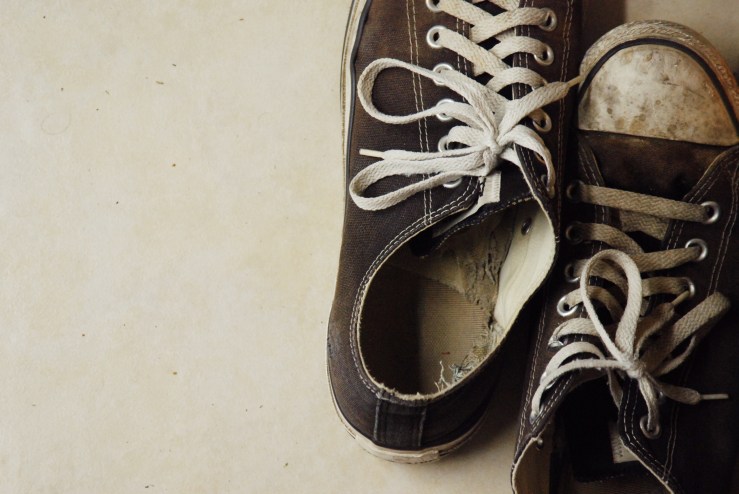
black-on-black kicks splayed forward
toes up to the indiana sun dimming
melting under 55 degrees
artifacted smirks & sour smiles
i sink below limestone fangs
blunted with petrified sponges
watching immensity pass me by

capacity to give a shit prepaid via
oxycodone-coated credit cards
declined, declined–i keep licking
off the oxy dust anyway

comforts superficial before
they touch the mouth
a baby viperfish threading
thru my eye sockets making
it live off candy roaches
feeding the surrogate anger

a sugar-coated silence begins
to flood the street, only skeletons remain

low-hanging moon dumped on
by a cherry slushie
donating my bloodsweets to wolf howls

i take a hit off the vape my boyfriend
gave me for the anniversary of the
first time i blew him in a parking lot
on Anna Marie Island
lungs liquefy and begin to drip
onto my stomach
smoke right through my chest gaped
like coastal vortex
spitting out platinum buckshot
bubbling up from my esophagus

making myself into fragments
pair of chuck taylor’s my gravestone
i’m not picking up the pieces


Mika Hrejsa is a trans girl and poet from rural Indiana. She mainly writes about identity, sexuality, and trauma. She tweets @tokyo_vamp. Her work can be found at http://neutralspaces.co/mikahrejsa/

“A Human Heart” by Austin Davis

3444285523_56eda5a30c_o.jpg

I’m missing you,
so obviously, this cloud
looks like a heart.

Not the corporate, greeting
card, capitalist kind of heart,
all cartoonish and fake,

or the smooth shape
two swans’ necks make
when they’re about
to get it on
to some lofi jazz shit,

but a real heart.

This is the kind of heart
I’ve drawn at the bottom
of every love poem
I’ve ever written you.

This is a human heart,
gross and squishy –
as raw and intimate

as standing naked in the daylight
in front of your soulmate
for the first time.

This is the kind of heart
that makes sure
your hand pulls out a dollar

every time a homeless woman
tells a shopping cart
about her childhood.

This is the only sad, beautiful
little thing no poet could ever
find a way to capture
with a pen or a cigarette,

the soft, juicy peach
floating through our night’s
quiet chest, far too in love

with the way its sun
will always love the color purple
at 5 in the afternoon

to take another beat
or shed another tear.

Austin Davis is a poet and student activist currently studying Creative Writing at ASU. Austin’s writing has been widely published in dozens of literary journals and magazines including Pif Magazine, After the Pause, Philosophical Idiot, Soft Cartel, and Collective Unrest. Austin’s first two books, Cloudy Days, Still Nights and Second Civil War were both published by Moran Press in 2018.  

“7th Grade” by Austin Davis

8486835824_b2ce5006cd_o.jpg

When I was in 7th grade,
I went to one of those talent shows
where jr high kids sing
their favorite sad songs.

One girl sang “Let Her Go”
in the kind of dark auditorium
that made me feel like a caveman
trying to articulate how scary death is
through grunts and growls.

In the row behind me,
this little blonde kid named Clay
whispered, Ain’t that the truth, man

as the girl with the kind of bruises
the doctor doesn’t notice during check-ups
sang, Only know you’ve been high
when you’re feeling low.

I used to know Clay
before he started lighting joints
between every class
and ashing them in the water fountains
when the bell rang.

This was the kid
whose code name for pot was “pizza,”
the kid who mixed little blue pills
into his Kraft mac & cheese,

the kid whose big brother
gotten taken away in handcuffs
for dealing that hard shit one September night
after helping his little brother
with a geometry worksheet.

This is the little boy, who 3 years later,
bumped into me on my way to gym class
with bloodshot eyes – fucked out of his mind
on meth, laughing the way the Joker does
after carving his initials into a teenager’s forehead.

He shoved a handmade vase into my arms.
A burnout kid crying on the moon
was painted on the side of the vase,
the color of a lit match
snuffed out in a sip of grape soda.

I didn’t know whether to grab Clay’s hand,
spit on the vase until the paint melted into a universe,
and throw the puddle of colors on to his chest
like the last handful of water in a dried out creek,

or if I should just walk away,
drop a fist of seeds into the vase,
and pray that one day,
a daffodil might find a way to grow.

Austin Davis is a poet and student activist currently studying Creative Writing at ASU. Austin’s writing has been widely published in dozens of literary journals and magazines including Pif Magazine, After the Pause, Philosophical Idiot, Soft Cartel, and Collective Unrest. Austin’s first two books, Cloudy Days, Still Nights and Second Civil War were both published by Moran Press in 2018.  

“Rage, Rage” by Jared Povanda

2350092646_ed06324981_o.jpg

(For Dylan Thomas)


Where the bluebells bloom

like crab meat, soft and melting

against a sun, tongue, an

agent of heat, of honey,

of fire, wind-strewn

to the four corners

where the bluebells bloom


Lenon sits on his back patio as the world ends. He presses the tip of his final pencil into the final stanza on the final page of his final notebook with the knowledge that his work will never be remembered. With the knowledge that fighting against the current of time isn’t as romantic as it’s often painted.

The wind chimes his mother sent him for this twenty-fifth birthday tinkle in their soft, percussive way above his head, but the wind is picking up. The wind won’t stop picking up. Sooner or later, the metal cylinders will come crashing down. Soon, the sun will follow.

“Why don’t you run?”

Lenon glances at the angel standing in his lawn. Long, long blond hair, so blond and long it’s nearly white—a curtain of ice trailing down his back. And then there’s his wings, curled currently, but wide and feathered and violent in their presumed impossibility when he had swooped down minutes before.

“Where is there to go?” Lenon answers, running fingers through his receding hair.

The angel shrugs. Smiles. “Does it matter? Humans are always running. When the flood comes, to higher ground. When the wind comes, below the earth. When the fires rise, into trees

like birds of prey.”

“The world is ending,” Lenon says. “There is nowhere to go anymore.”

“That isn’t our fault, human.”

“I never said it was.”

Lenon knows, like everyone else who once had access to TV, radio, or social media knows. The frogs went first. Global warming destroyed them. Vanished them into the ether. Then the bees collapsed and so did a huge chunk of human comfortability. Goodbye, cocoa bean. Goodbye. Species blinked out, blinked away, and the oil barons didn’t care. The presidents and kings didn’t care. Lip service, reversing the climbing waters flooding the costal cities. Lip service, erecting walls to halt the destructive maelstrom coursing its way across what used to be Australia.

“We’re here to bring you back,” the angel says. His garb is the color of ochre. “The experiment is over.”

“Do you find it ironic,” Lenon says, “that you’re killing us like we killed the worms and beetles? The boars and the giraffes? I find it ironic.”

The angel never stops smiling. “We’re not destroying you permanently. The Creator must tinker. He must adjust your levels of avarice and antipathy. We’ll restore you, a better you, and all the creatures you didn’t care enough to save.”

Lenon looks down at his calloused hands. What did he do to help the environment when he still could? Recycle every once in a while? Buy those cloth bags instead of using plastic at the supermarket? He’d never been much of a people person, so he was not the one to shout warnings from street corners. He went to work, a tiny cubicle in an office bought and paid for by the natural gas companies who destroyed all that sacred land out west, and then he went back to his empty home and his empty bed and wrote poetry to keep himself sane.

That aloneness—that smaller aloneness comprised of feeling alone within a group of people—hid itself in the bigger, more innate aloneness of himself. That innate, singular aloneness had always been there from the time Lenon was a boy on the playground.

What would it have been like to connect? What it have been like to shoot off and ricochet into the world?

“I had a professor once,” Lenon says, meeting the gray of the angel’s eyes. “If this were a story, fiction, he’d call this a bathtub story. A story where two characters sit around and talk for the entire narrative. A narrative where nothing happens.”

The angel lifts one perfect, unblemished finger. “Oh, no. Oh, that’s not true. Look around you, child, look around at everything happening. See, hear, smell, touch, taste. Go on. You don’t have much time left.”

Lenon reclines on the back porch to see the sky, yellow now with a type of jaundice. And he sees clouds. So many clouds. And when he opens his ears—

Chanting.

Melting.

Screaming.

Chiming.

Rustling.

Curling.

Cawing.

Snarling.

Biting.

Beating.

Beating.

The beat of his heart.

The beat of blood in his ears.

Then there is the touch of tears rolling down his cheeks like an avalanche, made all the worse by those shifting weather patterns.

In his mind’s eye, he sees walruses plunging to their deaths on boulders. He sees grass pulling up higher and higher until the monkeys in Africa have to fight for every last blade. He sees the snow leopard overheating under its pelt. The way its tongue lolls. The way its eyes flash with shame unknown to a predator so great as vultures circle and battle for scraps overhead.

Lenon watches a polar bear fall through an ice floe.

Lenon sees, as clear as the nectarine tree that used to grow in his grandmother’s garden, the fruit swole and dew-kissed, the way the owls slip right out of the sky.

And he sees the way the humans, one by one, are taken by those with long hair and wide wings. He sees, past the looting and the burning, past the destruction and the wild swerving of brains doing all they can to deny the coming of the end, the way the humans rage.

Rage, rage against the dying—

Lenon stands, pencil curled in his right hand, face sharp as the point.

“You’re right,” he says to the angel. “I don’t have much time.”

Two steps to leave the back patio, to feel the earth one last time against bare feet.

Smiling. Always smiling. Magnanimous with his time, the angel’s neck knocked back in repose…

“You can do nothing,” the angel says to the man. “What has come has already come. What will happen will happen.”

Rage.

Rage.

Lenon steps, steps, steps, muscles loose and fluid and warm. Hot as the air, as the wind rushing his face. The human bares its fangs.

Every cell, every vessel, every strand of DNA bares its fangs.

The angel laughs with a smugness once known to belong to humans. The irony is not lost, never lost, because energy can only ever be repurposed.

“What do you think—” The angel’s hair sparkles, glows as bright as his teeth.

Rage, rage, against the dying of the light.

The dying.

The human lifts his pencil, his sword, his clawed-paw.

The light.

Before attacking, tearing, howling at the way the blood moves inside him, and then outside, outside, outside, like a burst sun, a regression of cosmic proportions—

Hoping to do more than maim.


Jared Povanda is a writer from upstate New York who doesn’t know if he’d be able to stab an angel with a pencil at the end of the world, but he does know that we should save the environment while we still have the chance. Connect with him on Twitter @JaredPovanda, and read more of his work in fine places like SOFT CARTEL, CHEAP POP, and Lammergeier.

“Seventeen Senryū” by Tom Snarsky

14539551353_d72291bf73_o_d.jpg


I’m the pinball, falling absurdly back down when you miss the skill shot

The party ended four hours ago and you are just now arriving

Picking over the trash heap of your heart, you find nothing worth saving

The thing about beautiful sculptures made of shit is they’re made of shit

You try to have sex but your legs feel like they’ve already given up

I reach out across the space of the dream and try in vain to touch you

Love’s like horseradish: you have some & then fail to taste anything else

Remember that you are a molehill that can step on other molehills

Dermatologist recommended for when you’ve cried so hard you glow

When I waste water I think about the future, how dry it will be

Why get worked up about something when our collective end is so near

You climax and are immediately filled with a vast emptiness

True & brutal fact: yesterday’s future is none other than today

I’ve started to think in these now, which at least means I’ve started to think

Unicorns are in. Lisa Frank unicorns, by contrast, are way in

Please don’t look at me like I’m your father texting you with emojis

Mind like a diaper: changed frequently in light of new information


Tom Snarsky is getting married soon.

“My Hands Smell like Money” by Giacomo Pope

gia

I’m walking home and I’ve found a coin in my pocket. It’s raining and I’m buried inside my coat, rolling the coin around my fingers.

I think about lifting my hand up to my face and sniffing off that dirty-blood smell from loose change.

I think about being not-me and seeing me smelling my fingers. That a tired man smelling his fingers is not something other people should have to see.

I continue rubbing the coin.

On my way home I pass a shop.

I pass this shop every day and on most days I go inside to buy food.

Each day I walk to work, I sit in a chair for 8 hours, and then I walk home and buy food. This life is making me soft and I feel my body ripening under fluorescent lighting. My stomach feels like a rotten peach as it folds over my clothes. I’m not doing anything to fix this except wearing looser clothing.

Today I have food at home waiting for me so I don’t need to use the shop, but hey, I have this coin. So I go in.

I’m gonna use my coin.

I walk with purpose, big steps that say “Watch out everyone! Consumer coming through!”

There’s a promotion. My coin’s worth one vegan, organic “nut bar”. It’s basically just peanuts glued together with crushed dates and it’s high in calories.

The packaging is earth tones, covered in leaves. This bar is gluten-free. It contains only natural ingredients. This bar is healthy. I am being a good and responsible consumer.

I can imagine scrolling past the tweet “I recommend eating this nut bar”, which I would read internally with a slow, monotone voice.

I think about the fact that peanuts aren’t nuts. “Did you know that peanuts aren’t nuts, they’re actually peas?”

Fuck I’m boring.

I’ve actually said that to people face-to-face.

“They’re actually peas”.

Fuck.

I’m nearly home and a man comes up to me, he asks me for change.

He looks like I look, except his loose clothes have holes and he probably would wash if he could. I just don’t.

I’m looking at him with a mouth half full of pea bar.

I feel like a piece of shit. I’m walking home to eat food, while eating food, and my hands smell like money (I think) — but I’ve got no change.

“I don’t have any money, but I have this?”, and I hold out the snack.

“What is it?”, he said.

“A nut bar”, I lied.

The man took the food.

I kept walking. I could see my house.

My kitchen was glowing and I could see Holly cooking food.

I was still picking organic food out from between my teeth while walking to my next meal.

I am gross excess.

The inside of my house is warm. I have a toilet.

There’s a dude who shits in the ally opposite. He doesn’t have a choice.

I shit into clean water and scrub my ass with paper and then wash away the left over shit from my hands with cleaner water.

After I shit, my hands smell like flowers.

I didn’t let the man choose what to do with my change. Instead I bought him a nut bar, ate half of it and handed it over spit-wet and crumbling.

I imagined the guy biting into the bar and realising as he swallowed it was basically crushed peanuts.

I imagined a stomach so empty that I ate food I was allergic to anyway, that I was sitting on the stone steps outside the art school while it rained and my throat was swelling.

That I kept chewing and swallowing the food as my face went red and my eyes started to close up.

Thinking “fuck you hunger” and hoping to ride out the itching. Sweating under my hat while my lungs tightened to fists and my stomach acid burnt hot; still hungry after finishing off 1/2 of a stranger’s snack that they bought unconsciously on their way home, just to eat dinner out of the rain.


Recently, Giacomo has been writing poems & releasing spoken word music. When not doing those things, he is writing his thesis on black holes and running Neutral Spaces.